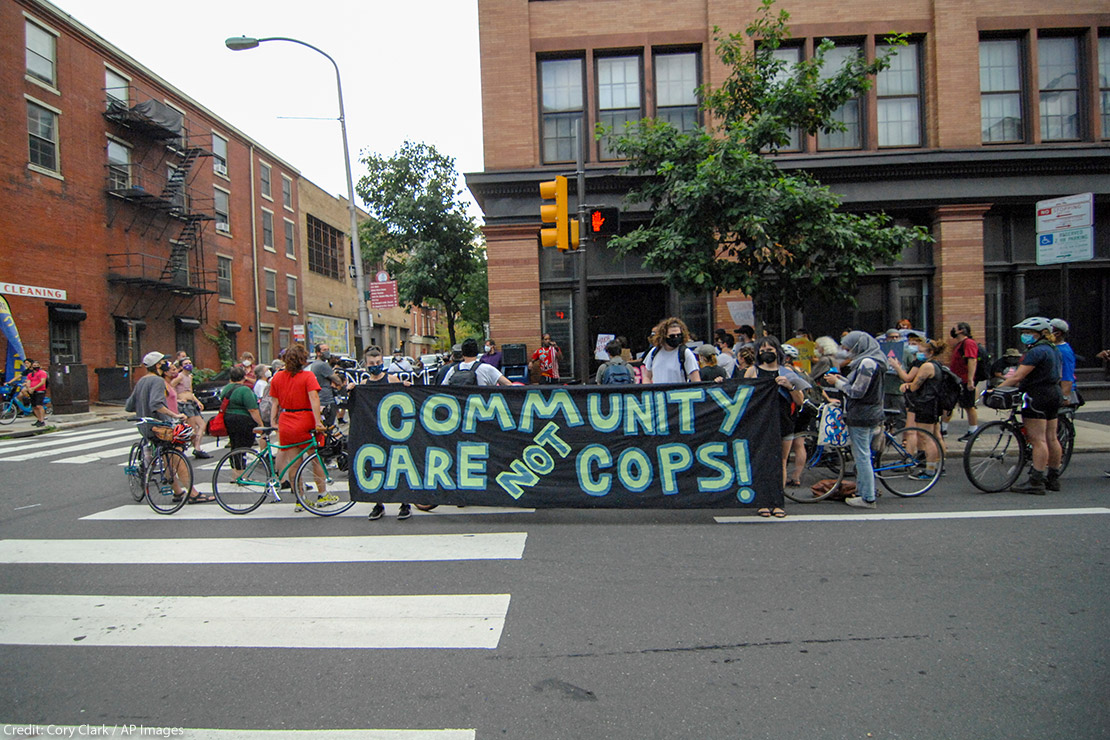
With the election just around the corner, we are chatting with some of our great volunteers about what issues are most important to them, and how they motivate voters to cast their ballots. We hope these conversations inspire you to vote for your values and join us in this once-in-a-generation battle to protect our nation.
https://go.peoplepower.org/signup/vote-your-values-fight-for-rights/
This week we talked with Connie Jeung Mills, a California-based arts activist and team volunteer with the ACLU People Power text team. People Power is the ACLU’s platform for grassroots action. Our volunteer teams help mobilize and organize communities all across the country in defense of our civil liberties by making calls, sending texts, and connecting with prospective voters about the issues that matter most to them.
ACLU: What motivated you to get involved with the ACLU as a volunteer?
CJM: I’ve known about the ACLU since I was a kid and they’ve always done great work. I’ve worked with other voting rights organizations in the past, so I was very inspired to work with an organization that cared about the same issues important to me.
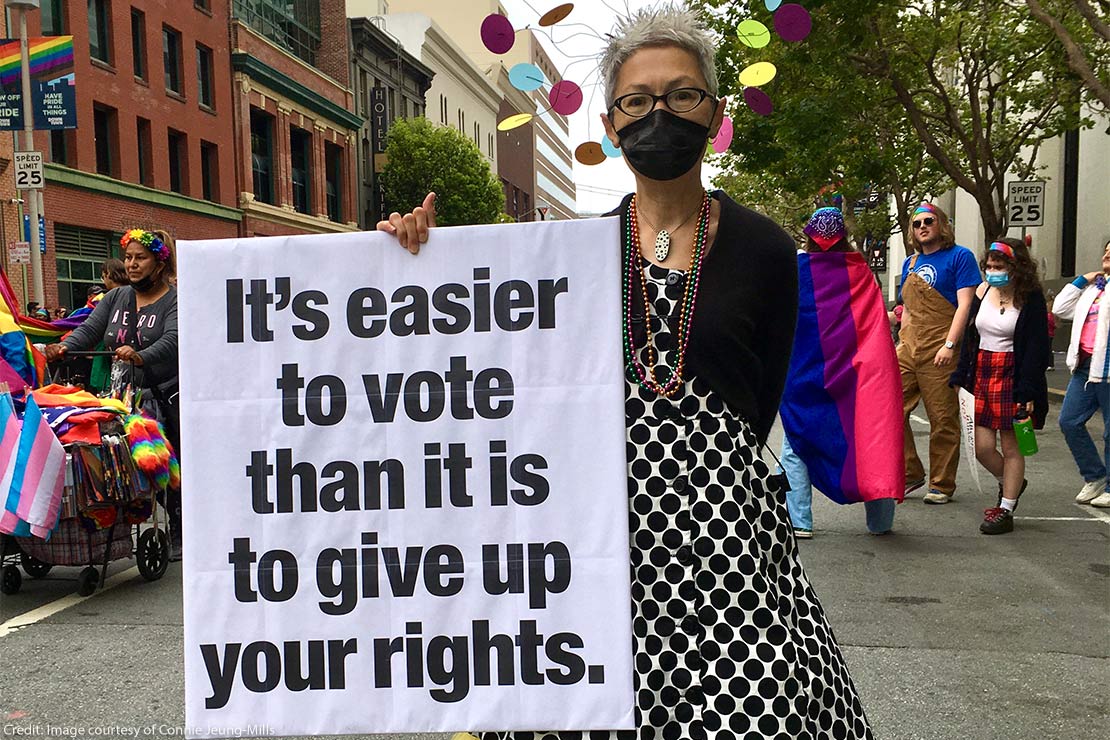
Activist Connie Jeung-Mills persuading people to vote in her community.
ACLU: What experiences have informed your activism?
CJM: I’ve voted my entire life, and my family has been involved in activism since I was young. An important part of my activism is the artwork I do. I remember watching television and seeing political activists at the D.C. Courthouse during the Trump administration holding signs with messages that were so powerful. And after that moment, a light bulb went off in my head, it was just the impetus for me to use my art and passion for activism to fight back.
ACLU: How do you explain to people why voting is important, and persuade them to take part in upcoming elections?
CJM: I find the best way to motivate people is to find out what motivates them. What issues motivate them to want to do something to help their community. And then I try to connect the dots between their passion for that issue and voting by explaining how the electoral process has a direct impact on their lives. Because when they’re voting, they’re voting for people that are going to represent them in government to bring about the change that they seek.
Being an activist and voter is not just one action for an election, it’s a lifelong effort.
ACLU: Sometimes people feel like their vote doesn’t matter, and are really discouraged by the current state of politics. What would you like to say to people who might opt not to vote because they feel powerless?
CJM: I would tell them that I understand how they feel. But especially right now, they can’t give up and change doesn’t come overnight. Although things seem tough right now, as we saw with the Supreme Court recently, too much is at stake in our country. Being an activist and voter is not just one action for an election, it’s a lifelong effort.
ACLU: Do you have any other advice for people who want to encourage people to get to the polls? What else do you want people to know about your experience?
CJM: The biggest piece of advice I could give people when talking to their friends and family about voting this November is it takes one person at a time and to always be authentic. People can tell when you talk to them if you are really listening to what they are saying to you. Also, I’m so happy to be volunteering for the ACLU. The ACLU stands up for me and I want to help them, help other people, not just me.
Interested in working with people like Julia to defend our rights? Find out more about how to get involved here.
https://www.aclu.org/news/voting-rights/midterm-elections-how-these-offices-impact-your-rights
Comments
Post a Comment