
Today, the Arizona Supreme Court will consider whether to resurrect a more than 150-year-old criminal ban on virtually all abortions. The court’s decision could allow that law to take precedence over Arizona’s modern abortion laws, including those passed just last year by the people’s current elected representatives.
This ban was originally struck down in 1973, thanks to a lawsuit brought by Planned Parenthood and physicians in Arizona, and since that time has been superseded by a comprehensive scheme that regulates abortion as a lawful medical procedure. But an anti-abortion activist and County Attorney are now asking the Arizona Supreme Court to turn back the clock. No one should be forced to carry a pregnancy to term against their will and face the life-altering consequences of being denied essential health care, but reviving this antiquated law in full would do just that — and, at the same time, throw Arizona’s entire contemporary legal code into confusion.
The origins of Arizona’s near-total criminal ban at issue in this case go back to 1864. To put that into context: This ban was enacted during the Civil War era, when women were not allowed to vote, and Arizona was not even a state. Yet even though Arizona’s current abortion laws permit abortion through 15 weeks of pregnancy, the 1864 ban permits abortion only when necessary to save the patient’s life. In all other situations, performing an abortion would lead to felony charges and prison time.
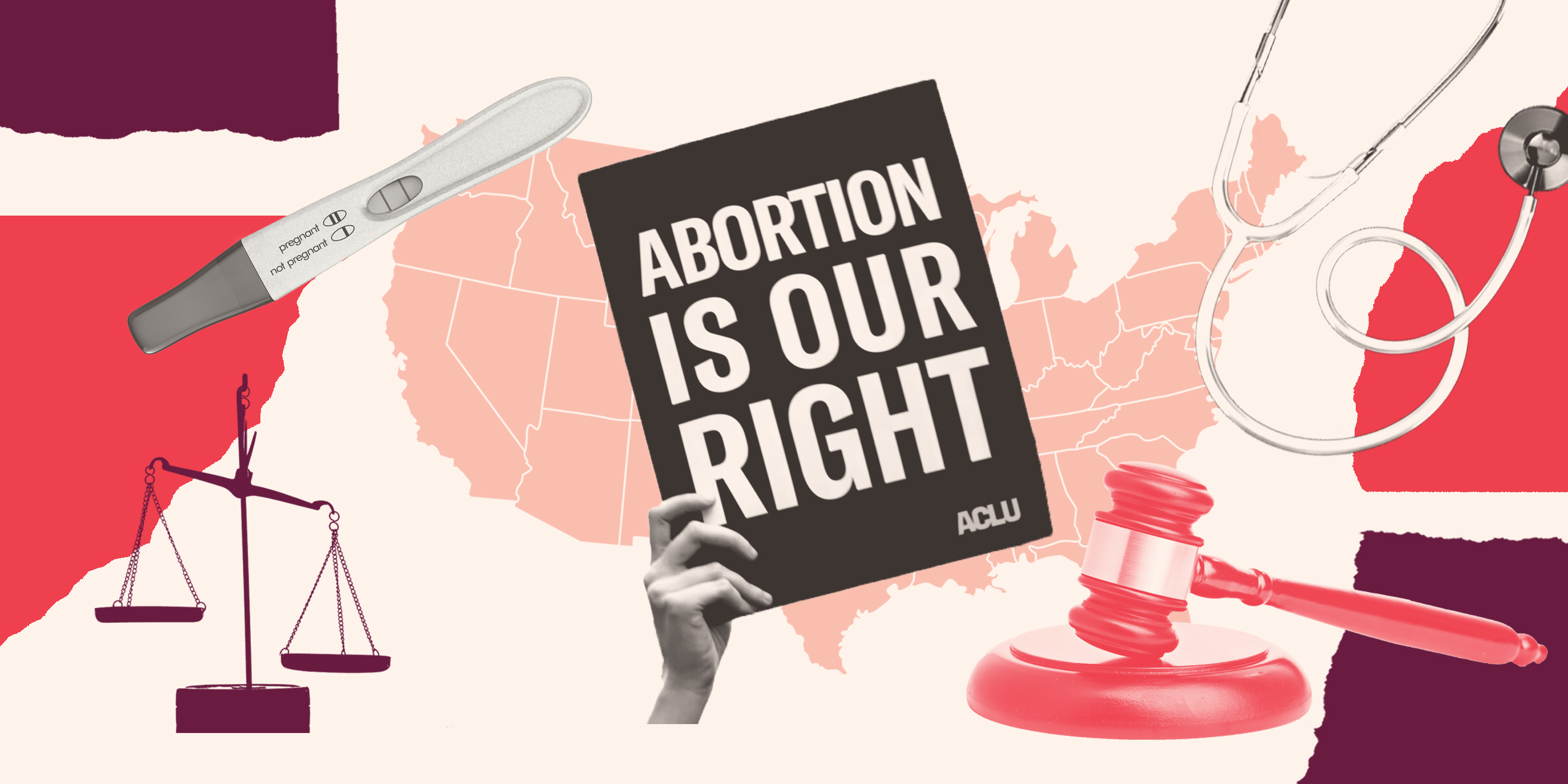
Abortion Criminal Defense Initiative
The Abortion Criminal Defense Initiative is one way the ACLU is confronting the criminalization of abortion care.
Source: American Civil Liberties Union
Given that eight in 10 Americans — who are around today — support the legal right to abortion, allowing this zombie abortion ban to be enforced against abortion providers would be profoundly undemocratic. This law — which no current elected official or Arizonan ever voted for — would condemn all those in Arizona who can become pregnant to a second-class status, denying them control over their bodies and their futures. It should come as no surprise, then, that leading medical groups are united in condemning abortion bans like these, as they threaten patients’ health and disproportionately harm marginalized patient populations.
These are not theoretical concerns. It is all too easy to predict what the full impact of imposing the 1864 ban would be, because we have seen the devastating impact of such extreme abortion bans throughout the country, since the U.S. Supreme Court overruled Roe v. Wade last year in Dobbs v. Jackson Women’s Health.
Following Dobbs, it is estimated that nearly a quarter of pregnant people seeking an abortion have been unable to get one. The enduring harms to women and children’s financial, medical, and overall wellbeing caused by being denied an abortion are well-documented. Abortion bans have resulted in tragic stories of pregnant patients facing dangerous pregnancy complications being denied care, children as young as 10 years old pregnant as a result of rape unable to access care in their state — and in some cases unable to get an abortion at all, as well as countless other egregious scenarios.
Of course, even before Dobbs, pregnant people faced substantial obstacles accessing abortion care. But the burdens after Dobbs on pregnant people attempting to seek care — including greater travel time, increased expenses, and the threat of prosecution for those who try to help pregnant people get care out of state — have made accessing abortions impossible for some.

Alabama Health Care Providers File Lawsuit to Prevent the Prosecution of Those Helping Patients Seek Out-of-State Abortion Care
Health care providers filed a lawsuit to prevent the prosecution of those who assist Alabamians seeking to access abortion care across state lines.
Source: American Civil Liberties Union
Thankfully, in a well-reasoned decision issued in December 2022, the Arizona Court of Appeals refused to impose the near-total ban on abortion across the state the ban. (The ACLU and partners at the ACLU of Arizona, the Center for Reproductive Rights, and Perkins Coie LLP have also filed our own suit seeking to ensure that the 1864 ban does not supplant Arizona’s current abortion laws.) The Arizona Supreme Court must do the same.
Although this case is principally about applying longstanding legal precedent, the stakes are high — and the chaos and harms that would result from the Civil War-era ban criminalizing nearly all abortion care are no less fundamental, undeniable, and terrifying. The Arizona Supreme Court must keep a lid on the Pandora’s box that the ban would unleash on pregnant people in Arizona, their families, and their communities.
Comments
Post a Comment