
George Takei has joined the ACLU as a special guest contributor for Asian American Pacific Islander History Month.
On March 14, Donald Trump signed a proclamation invoking the Alien Enemies Act to carry out his mass deportations. The last time this law was invoked was during World War II, when it was weaponized to justify the incarceration of Japanese Americans, including my family. Now, I see history echoing in disturbing ways.
I was only a child when my parents and I were forcibly removed from our home and placed in internment camps without charge or trial — what we call due process — and branded as enemies solely because of our ancestry.
Just a few weeks after my fifth birthday, my parents woke me and my brother up very early and dressed us hurriedly. My brother and I watched out our living room window as two soldiers marched up our driveway, banged on our door, and ordered us out of our home. My father gave my brother and me some luggage to carry, and we all walked out to stand on our driveway, waiting for my mother. When she finally walked out, she carried my baby sister in one arm and carried a huge duffel bag in the other. Tears were streaming down both her cheeks.
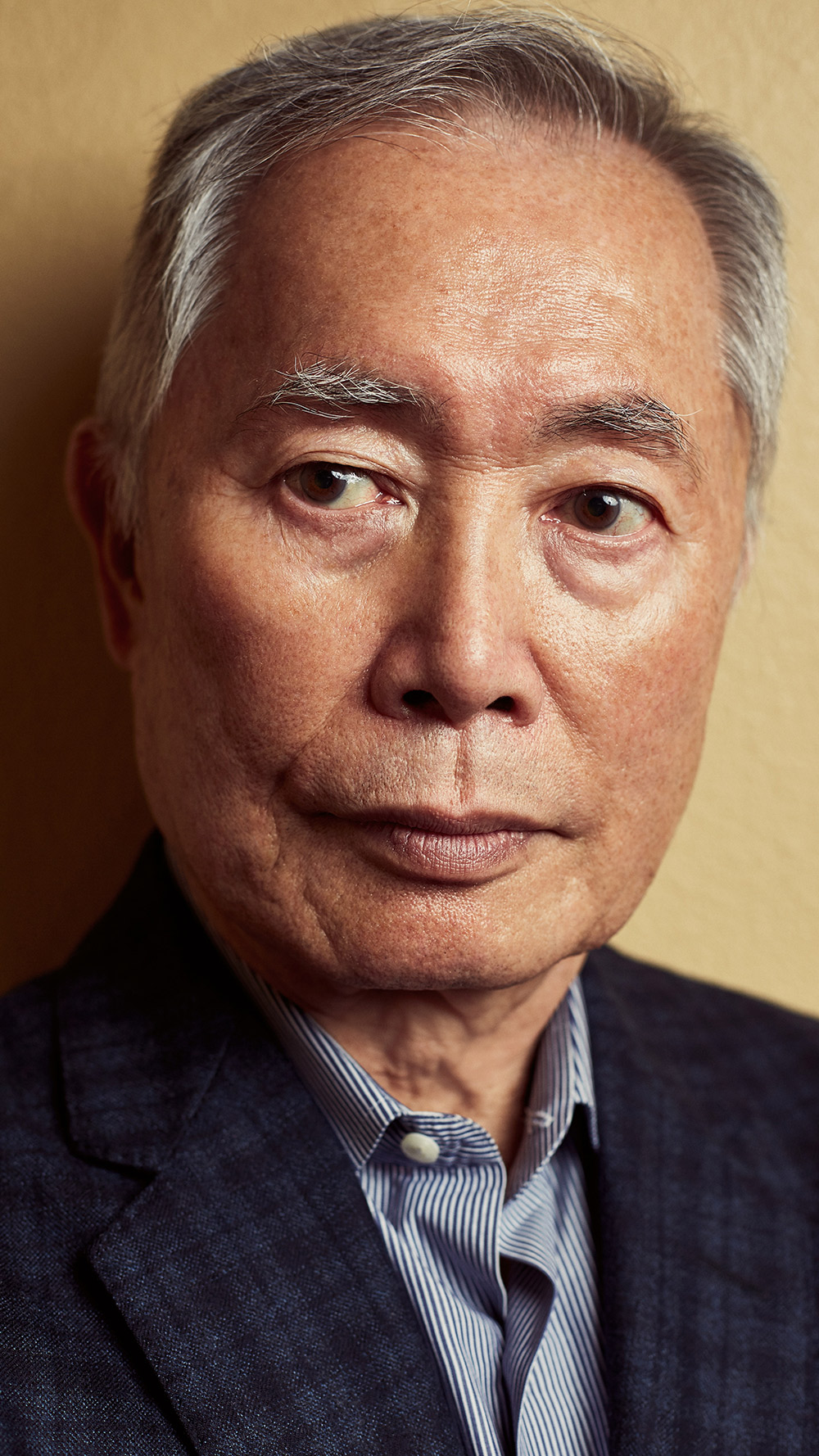
George Takei
Brenda Bazán
I will never be able to forget that moment. It is burned into my memory.
My family was first incarcerated at the Santa Anita racetrack, where we were forced to live in a horse stable. Once the camps were built, we were put on a train and transferred across the country to the Rohwer War Relocation Center, in the swamps of Arkansas. We lived there for a portion of the war, before my family was transferred one final time to the Tule Lake War Relocation Center in Northern California.
It was a degrading, humiliating experience, especially for my parents. As a child, I was too young to fully understand why this had happened to us. But I could sense my parents' anxiety. Things that should have been grotesquely abnormal quickly became my new normal. I still remember the barbed wire fences that surrounded us, the tall sentry towers with machine guns pointed into the camps at us, the tanks that patrolled the camps’ perimeter.
Even after the war ended and we were released from the camps, my family still suffered. We faced intense hostility. Everything we owned had been taken from us when we were rounded up for incarceration, leaving us penniless. Our first home after we left the camps was on Los Angeles’ Skid Row, where we lived in horrific conditions. My parents had to work hard to rebuild their lives.
That dark chapter in American history left scars that persist to this day. Now, we see history echoing in disturbing ways, as the government attempts to invoke the very same law that was weaponized to incarcerate my family to carry out mass deportations — again, without charge or trial, stripping individuals of due process.
We must learn from the past, not repeat it. The erosion of rights and the targeting of communities based on fear and prejudice must be challenged at every turn.
My father taught me that our democracy is a people’s democracy. It can be as great as a people can be, but it is also as fallible as people are. Our democracy depends on good people who cherish the ideals of our system, and who are willing to engage in the process of making our democracy work. That is why I stand with the ACLU in fighting to prevent these injustices from happening again.
Comments
Post a Comment