
THE POWER OF PROSECUTORS


Prosecutors have used their power to pack jails and prisons. And it has taken decades, billions of dollars, and thousands of laws to turn the United States into the largest incarcerator in the world. But did you know that prosecutors also have the power to dismantle this machine — even without changing a single law?

This video series, presented by the ACLU Campaign for Smart Justice and In Defense Of, a project of Brooklyn Defender Services, shows how prosecutors can single-handedly transform the broken American criminal justice system.

Featuring DeRay McKesson (civil rights activist), Nina Morrison (The Innocence Project), Baratunde Thurston (Author and Comedian), Adam Foss (a former prosecutor), Scott Hechinger (Brooklyn Defender Services), John Pfaff (professor and author of Locked In), Josie Duffy-Rice (Fair Punishment Project), and Brandon Buskey (ACLU).

Prosecutors have the power to flood jails and prisons, ruin lives, and deepen racial disparities with the stroke of a pen. But they also have the discretion to do the opposite. This video explores the power of prosecutors to continue to drive mass incarceration — or end it.
Play the video


Bail

The U.S.’s wealth-based incarceration system allows those with money to walk free before trial, while those who can’t make bail remain locked up. Guess who decides whether someone will have to pay bail? Believe it or not, the answer is often prosecutors. But they also have the power to recommend freedom.

Play the video


Charging

Prosecutors are the gatekeepers of the criminal legal system. They decide whether to prosecute and what to charge. Their harsh and discriminatory practices have fueled a vast expansion of incarceration as the answer to societal ills over the last several decades. This video exposes how basic charging decisions can reduce our reliance on incarceration and lead to healthier communities.
Play the video

Prosecutors are the gatekeepers of the criminal legal system. This video exposes how basic charging decisions can reduce our reliance on incarceration and lead to healthier communities.

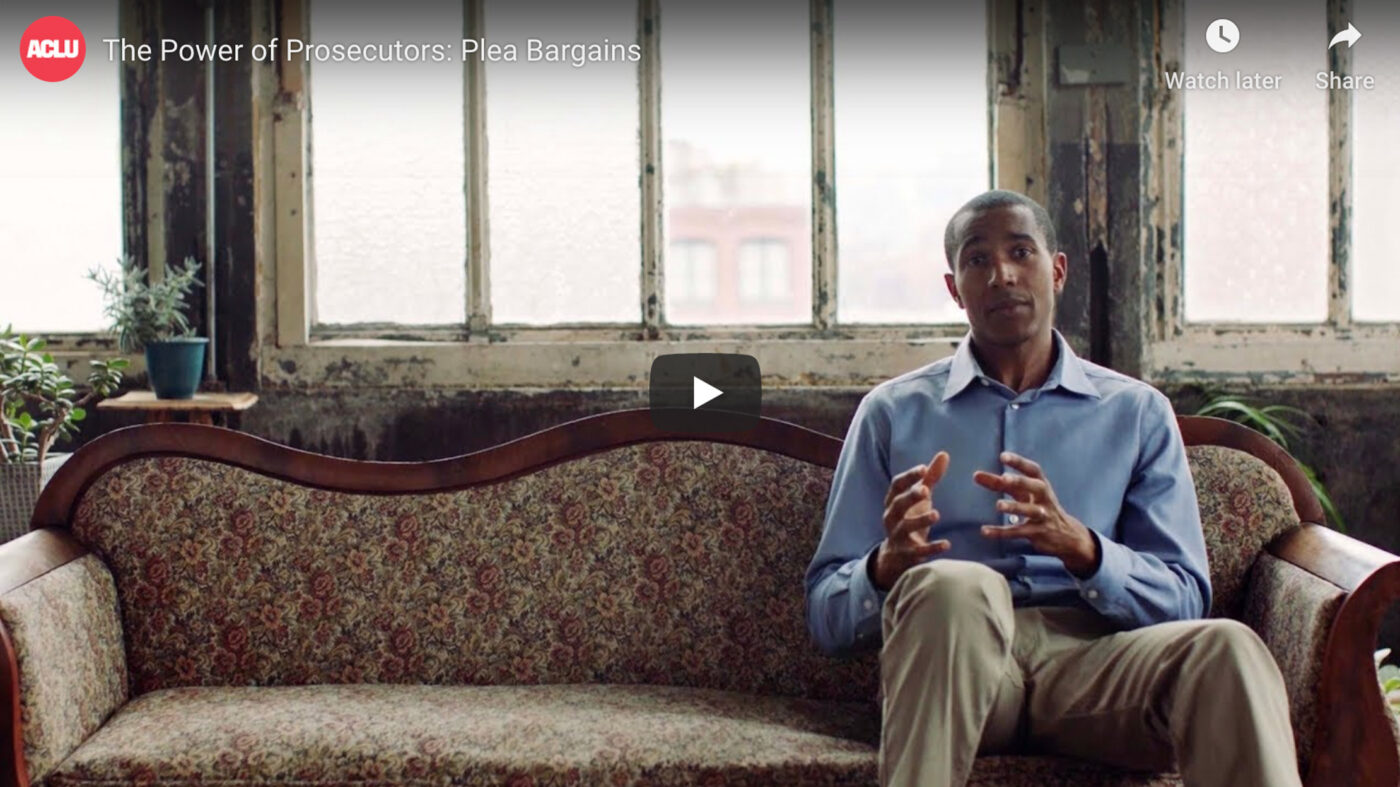
Plea Bargains

Did you know that more than nine out of 10 cases are resolved by plea bargain? That’s in large measure because the harsh criminal laws, like mandatory minimum sentences, have stripped judges of much of their discretion and have instead given prosecutors all the negotiating power. The result: Overwhelmingly, people plead guilty, even when innocent, out of fear of a negative outcome at trial.

Play the video

Accountability

Almost all prosecutors in America are elected officials. And voters across the United States — in red and in blue states alike — strongly prefer elected prosecutors who are committed to reducing incarceration, ending racial disparities, and being fully transparent. This video explains how voters can hold prosecutors accountable because power concedes nothing without a demand.
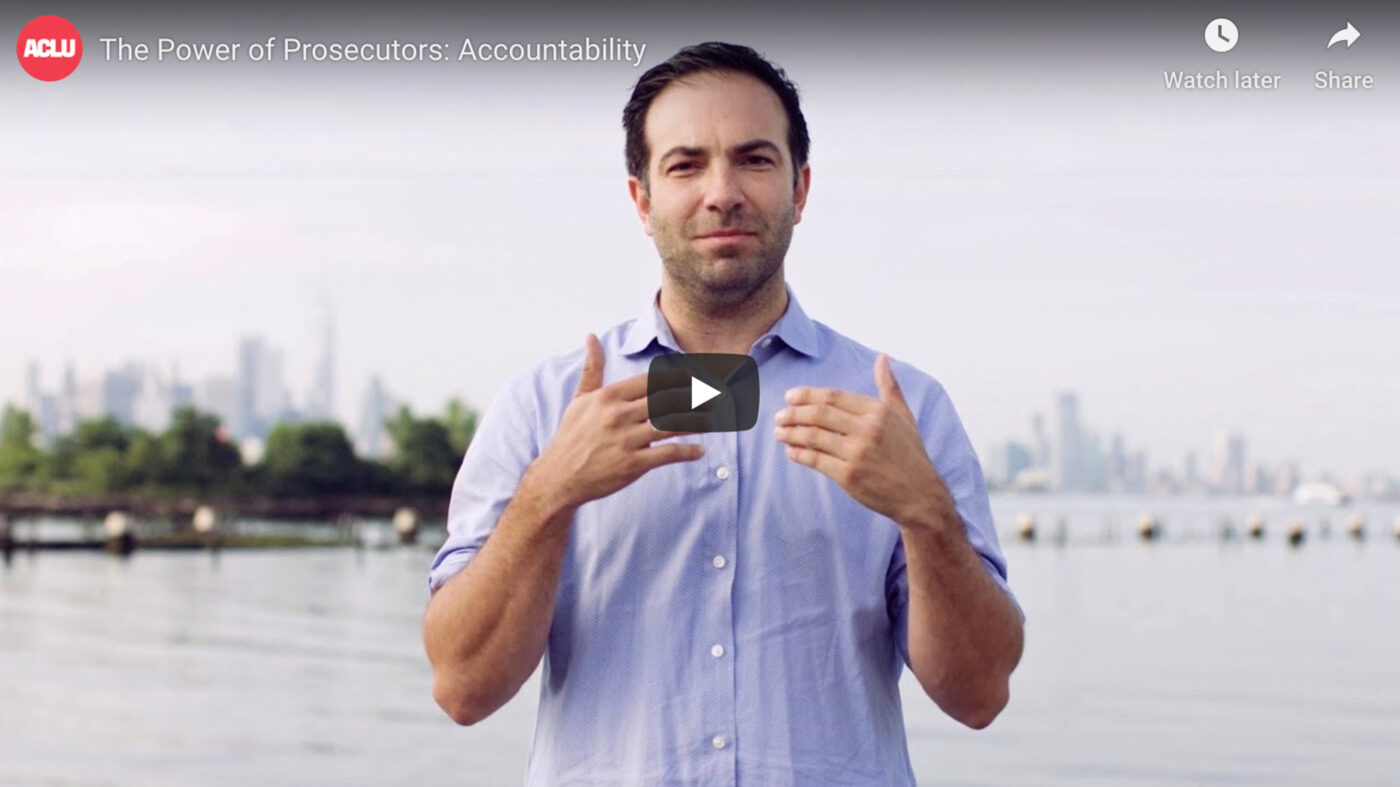
Play the video

This video explains how voters can hold prosecutors accountable because power concedes nothing without a demand.

Comments

Popular posts from this blog

Documents Reveal Confusion and Lack of Training in Texas Execution

As Texas seeks to execute Carl Buntion today and Melissa Lucio next week, it is worth reflecting on the grave and irreversible failures that occurred when the state executed Quintin Jones on May 19, 2021. For the first time in its history — and in violation of a federal court’s directive and the Texas Administrative Code — Texas excluded the media from witnessing the state’s execution of Quintin Jones. In the months that followed, Texas executed two additional people without providing any assurance that the underlying dysfunction causing errors at Mr. Jones’ execution were addressed. This is particularly concerning given that Texas has executed far more people than any other state and has botched numerous executions. The First Amendment guarantees the public and the press have a right to observe executions. Media access to executions is a critical form of public oversight as the government exerts its power to end a human life. Consistent with Texas policy, two reporters travelled t...

The Young Singaporean's Guide to Saving & Investing on a Small Salary (2025 Edition)

The Young Singaporean’s Guide to Saving and Investing on a Small Salary Introduction Living in Singapore can feel overwhelming when you’re just starting your career. Rents are high, kopi prices keep rising, and saving on a monthly salary of $2,500–$3,000 might seem impossible. Yet, many young Singaporeans have proven that with the right habits, even a small income can grow into long-term financial security. The key is to start early, be consistent, and leverage the tools available to you — especially CPF, robo-advisors, and smart budgeting. This guide breaks down practical steps you can take to save and invest, even if you’re earning on the lower side. 💰 1. Start with the Basics: Budgeting the 50/30/20 Way If you’re earning $2,800 a month (a common starting salary for many graduates), here’s how the 50/30/20 rule can be applied in Singapore: 50% Needs ($1,400) – rent, transport (MRT/Grab), phone bills, meals. 30% Want...

ये हैं लॉकडाउन के हीरो, जरूरतमंदों को पहुंचा रहे जरूरी सामान

लॉकडाउन में लोग 21 दिनों से घर में बंद हैं। इस दौरान जरूरतमंंदों को जरूरी सामान पहुंचाने का काम कर रहे हैं कुछ हीरोज। एलेप्पी में 50 साल के बुजुर्ग घर-घर सामान पहुंचा रहे हैं वहीं जम्मू-कश्मीर के पूंछ जिले में सेना फ्री में राशन बांट रही है। from Latest And Breaking Hindi News Headlines, News In Hindi | अमर उजाला हिंदी न्यूज़ | - Amar Ujala https://ift.tt/34dPrA7 via IFTTT