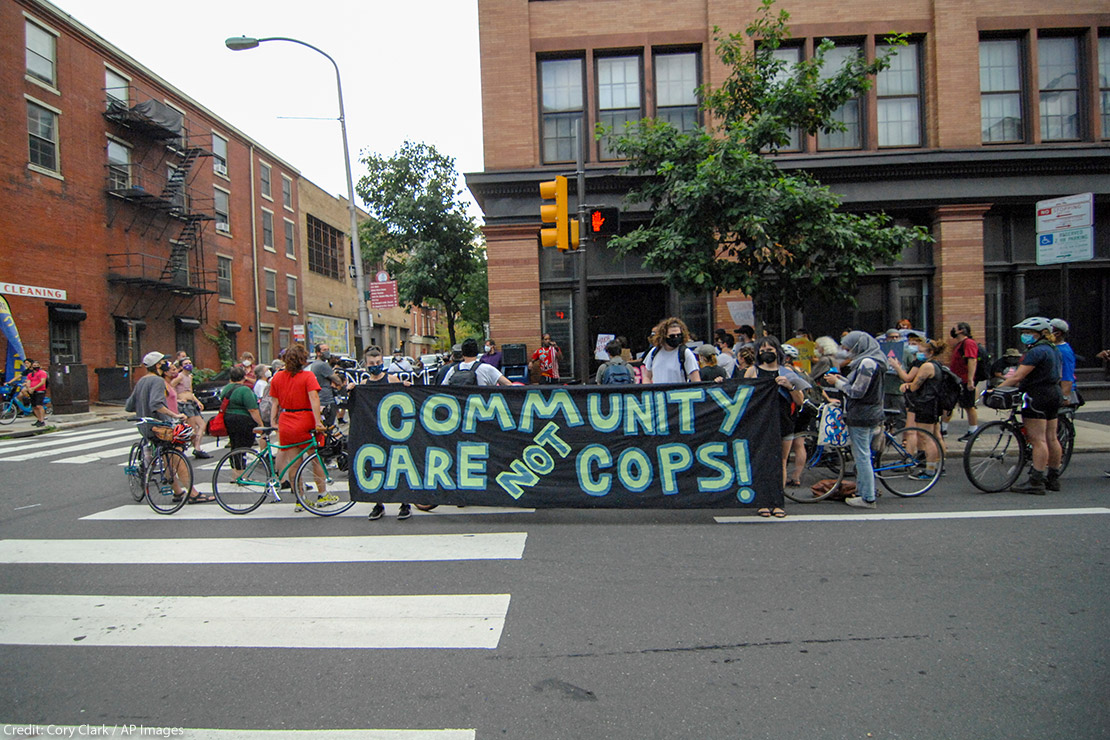
First, Donald Trump and right-wing extremists attacked government trainings on racism and sexism. Then the far right tried to censor classroom instruction on racism and sexism. Next, they banned books about BIPOC and LGBTQ lives. Today, the extreme right’s latest attack is aimed at dismantling diversity, equity and inclusion (DEI) programs.
In 2023, the far right introduced at least 65 bills to limit DEI in higher education in 25 states and the U.S. Congress. Eight bills became law. If this assault on our constitutional rights feels familiar, that’s because it is. It was last seen in 2020 when Trump-aligned politicians fought to pass unconstitutional laws aimed at censoring student and faculty speech about race, racism, sex and sexism. The ACLU challenged these laws in three states, but today, anti-DEI efforts are the new frontier in the fight to end the erasure of marginalized communities.
DEI programs recruit and retain BIPOC, LGBTQ+, and other underrepresented faculty and students to repair decades of discriminatory policies and practices that excluded them from higher education. The far right, however, claims that DEI programs universally promote undeserving people who only advance because they check a box. Anti-DEI activists like Christopher Rufo consistently frame their attack as a strike against “identity politics,” and have weaponized the term “DEI” to reference any ideas and policies they disagree with, especially those that address systemic racism or sexism.
This attack on DEI is part of a larger backlash against racial justice efforts that ignited after the 2020 killings of George Floyd, Ahmaud Arbery and Breonna Taylor. At the time, workplaces, schools, and other institutions announced plans to expand DEI efforts and to incorporate anti-racism principles in their communities. In response, far-right activists, led by Rufo and supported by right-wing think tanks such as The Manhattan Institute, The Claremont Institute, and The Heritage Foundation, went on the offensive.
Leveraging Fox News and other mainstream media outlets, Rufo and his supporters sought to manufacture hysteria around the inclusion of critical race theory in schools and workplaces. After a 2020 appearance on Fox News where Rufo misrepresented the nature of federal trainings on oppression, white privilege, and intersectionality as indoctrination of critical race theory in our public spaces, Rufo convinced former President Trump to end federal DEI training. Rufo’s goal was to limit discourse, instruction, and research that refuted the false assertion that racism is not real in America – and he succeeded. Just three weeks later, Trump issued Executive Order 13950, which banned federal trainings on systemic racism and sexism. This Executive Order served as the template for most of the educational gag orders, or bills introduced to limit instruction on systemic sexism and racism in 40 states, 20 of which are now law.
The ACLU has consistently opposed efforts to censor classroom instruction on racism and sexism, including in Florida where some of the most egregious attacks on DEI, critical race theory and inclusive education have been mounted. Following the far right’s “anti-wokeism” playbook, in April 2022, Florida Governor Ron Desantis signed the Stop W.O.K.E. Act, which seeks to ban training or instruction on systemic racism and sexism in workplaces, K-12 schools, and higher education. The ACLU, the ACLU of Florida and our co-counsel challenged the law, claiming it violates the First and Fourteenth Amendments by imposing viewpoint-based restrictions on instructors and students in higher education, and fails to state explicitly and definitely what conduct is punishable. A federal judge has blocked it from being enforced in public universities across the state.
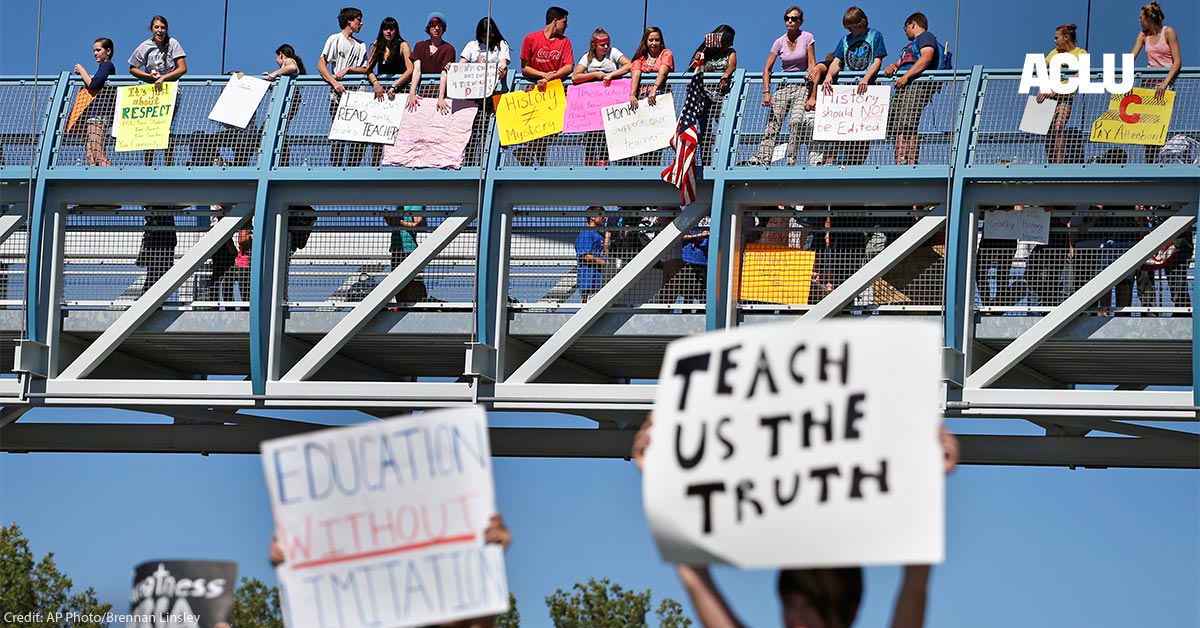
Lessons Learned from Our Classroom Censorship Win Against Florida’s Stop W.O.K.E. Act
Here’s what the judge’s order could mean for challenges to censorship efforts nationwide.
Source: American Civil Liberties Union
Instead of ceasing to censor free speech, the far right pivoted to target DEI programs. For example, Florida passed Senate Bill 266 in April 2023. This law would expand the Stop W.O.K.E. Act’s prohibition on training and instruction on racism and sexism, seeking to eliminate DEI programs and heavily restrict certain college majors related to DEI. Just last month, the Florida State Board of Education moved forward with regulations to limit the use of public funds for DEI efforts in Florida’s 28 state colleges. The State Board also replaced the Principles of Sociology course, which was previously required, with an American History course to avoid “radical woke ideologies.”
Led by the same far-right leaders, including Rufo and various think-tanks, these anti-DEI efforts utilize the same methods as the attack on critical race theory. They represent yet another attempt to re-whitewash America’s history of racial subjugation, and to reverse efforts to pursue racial justice—or any progress at all. Anti-DEI rhetoric has been used to invalidate immunological research supporting the COVID-19 vaccine, conclusions by economists on mass migration, and even the January 6 insurrection. But these false claims are not what DEI is about. By definition equity means levelling the playing field so qualified people from underrepresented backgrounds have a fair chance to succeed. We cannot let a loud fringe movement convince us otherwise.
In its attacks on DEI, the far right undermines not only racial justice efforts, but also violates our right to free speech and free association. Today, the ACLU is determined to push back on anti-DEI efforts just as we fought efforts to censor instruction on systemic racism and sexism from schools.
Comments
Post a Comment