
Since the fall of Roe, Americans have consistently supported reproductive freedom at the polls. Knowing this, ACLU advocates across the country have worked to ensure the people have a say on reproductive freedom. On Election Day, voters will decide on ten ballot initiatives that will protect and increase abortion access at the state level.
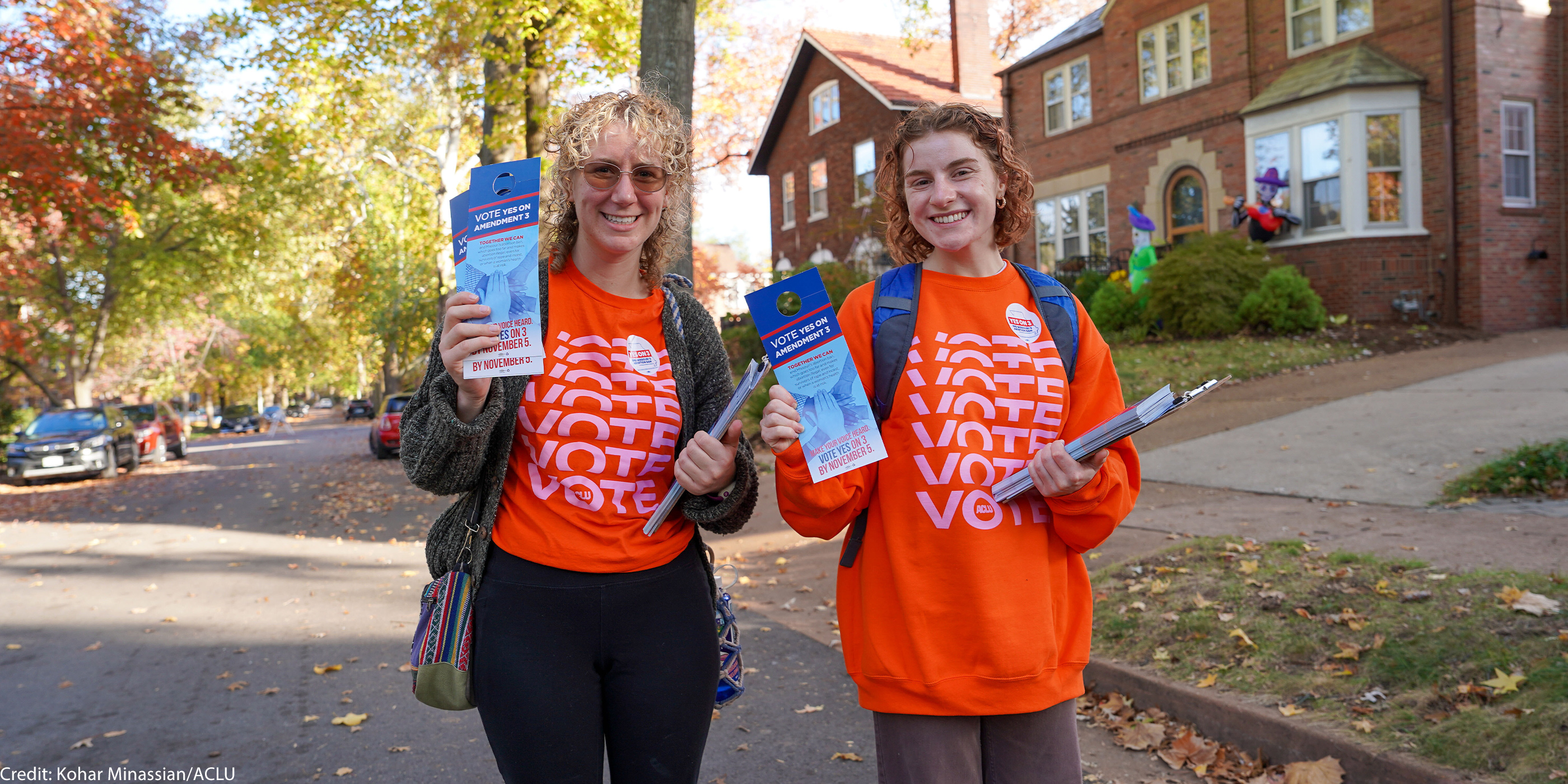
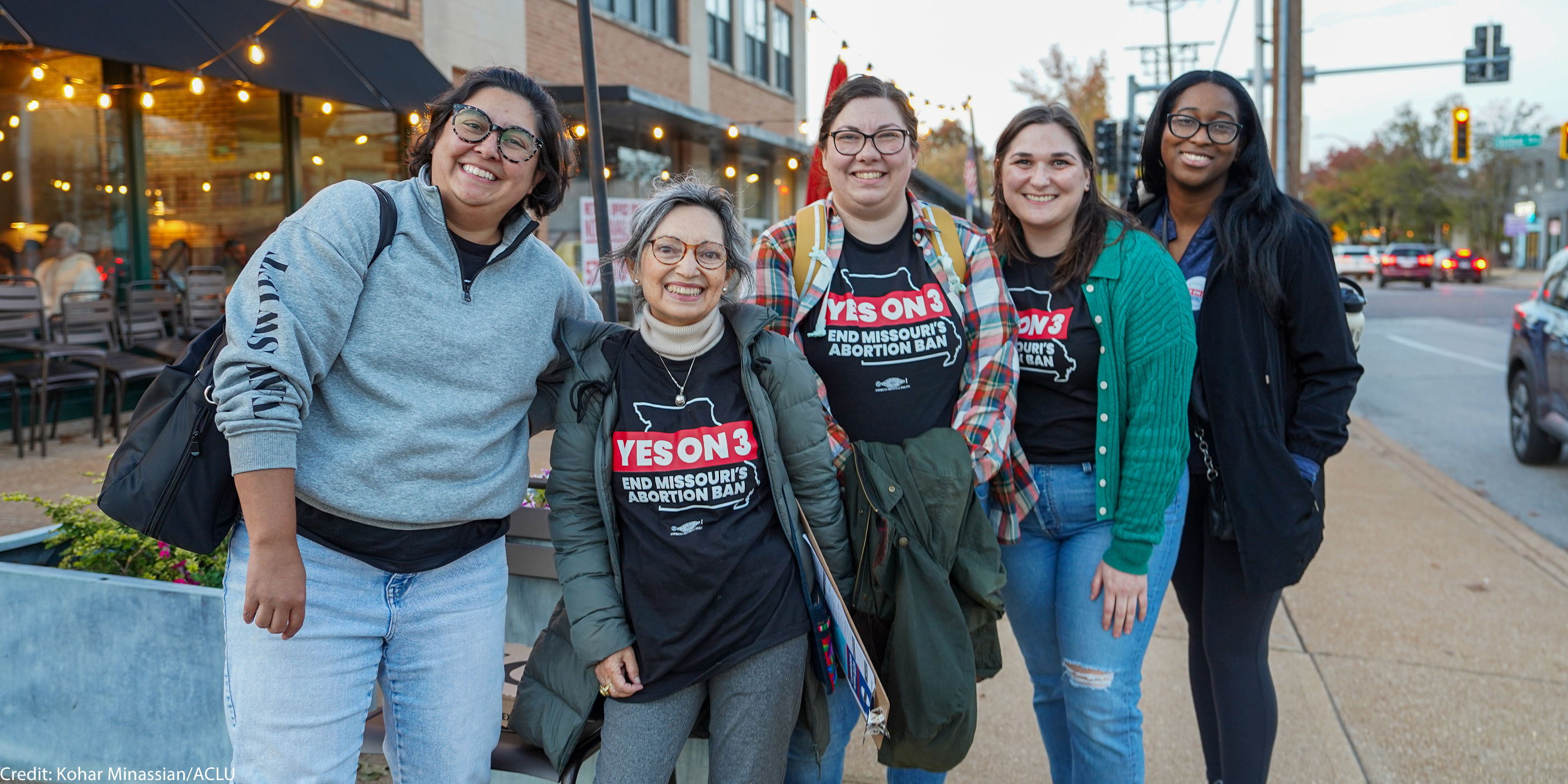
While 13 states currently have total abortion bans in effect, Missouri was the first state to enforce its ban, taking action mere minutes after the fall of Roe. Alongside local partners, the ACLU of Missouri has spent years fighting to secure access to reproductive health care. Today, Missourians will decide on Amendment 3, which would enshrine the right to reproductive freedom in their state constitution.
In Arizona, lawmakers have likewise aggressively restricted abortion access for decades, imposing a 15-week ban on abortion after Roe was overturned and trying to reinstate an 1864 total abortion ban. The ACLU of Arizona was one of the leading organizations supporting Proposition 139, the Arizona Abortion Access Act, which would establish a fundamental right to abortion in the state’s constitution.
Ahead of Election Day, we spoke with Tori Schafer, the director for Policy and Campaigns at the ACLU of Missouri, about what Amendment 3 means for the future of reproductive health access in her state. We also spoke to Victoria López, the director of program and strategy at the ACLU of Arizona, about the impact of Proposition 139.
This conversation has been edited and condensed for clarity.
ACLU: Tell us about the history of reproductive rights in your state?
Schafer: In 2019, despite a majority of Missourians supporting reproductive rights, the state legislature passed one of the most restrictive abortion bans in the country. Immediately, the ACLU of Missouri began organizing with partners to reject the law’s enactment [at the ballot]. The secretary of state stalled these efforts and, after lengthy litigation, we prevailed, but without enough time to collect the required signatures to initiate the referendum process. Frustrated with constantly playing defense, we began exploring the idea of bringing full constitutional protections for reproductive freedom directly to the people.
Lopez: Arizona has a long history of passing restrictive laws that prevent people from getting the abortion care they need. The ACLU of Arizona has consistently been involved in litigation and advocacy to challenge abortion restrictions, including a fetal personhood law [and] 15 and 20-week bans.
When I started at the ACLU of Arizona, one of the first cases I learned about was a challenge to a policy requiring women in jail to pay for their own transportation to medical appointments for abortion care. That case was my first on-the-ground experience fighting to ensure abortion access for all people in our state.
ACLU: How would the ballot measures in your state help residents?
Schafer: This ballot measure, “The Right to Reproductive Freedom,” is a constitutional amendment that would end the state’s abortion ban and give Missourians the right to make their own health care decisions — free from political interference. It also protects other forms of reproductive healthcare, including prenatal care, miscarriage care, and respectful birthing conditions.
Lopez: Proposition 139, the Arizona Abortion Access Act, is a people-powered initiative that establishes a fundamental right to abortion in our state’s constitution.
Prop 139 is based on that very-Arizona idea that politicians should not interfere in private medical decisions. As a “battleground” state with an abortion initiative on our ballot, we also see the direct connection between defending democracy against extremist threats so our communities can achieve the rights and dignity they deserve, including abortion access.
ACLU: Getting measures on the ballot is often challenging. What has the fight for this ballot measure been like?
Schafer: After many conversations with reproductive health care experts, community leaders, and lawyers, the committee filed the ballot measure in March 2023. However, the secretary of state refused to certify the measure. It was the first time a secretary tried to undermine the process in this way. That’s when we went to the Missouri Supreme Court for the first time – and won. After two more lawsuits to block misleading ballot summary questions and exaggerated claims about the measure's fiscal impact, the committee began collecting signatures in January 2024 and gathered more than double the required amount.
An incredible amount of work from volunteers and organizers across the state, a total of five legal challenges, and boundless hope have led to voters having Amendment 3 on their ballot.
Lopez: Following the Dobbs decision, Arizonans faced a complicated and shifting landscape around their right to abortion. We quickly saw efforts to reinstate a Civil War-era abortion ban from a time before Arizona was even a state that would have banned abortion in almost every case.
We worked with partners to successfully advocate at the legislature and through litigation to ensure this ban would never take effect. While the Arizona Supreme Court ultimately decided to reinstate the 1864 ban on abortion, subsequent legislative advocacy resulted in the repeal of that law. Fortunately, we never saw that antiquated law go into effect. However, the legislature left a 15-week ban in effect that has denied countless Arizonans access to needed care. In response to these attacks on their rights, communities across the state took action, collecting over 820,000 signatures, more than any ballot measure in the state's history, to qualify for the ballot.
ACLU: How does your state fit into the nationwide fight for our rights?
Schafer: Missouri was the first state to enforce a total abortion ban after Dobbs. When we pass Amendment 3, we’ll be the first state to end a total abortion ban [in effect]. I hope people see victories in states like mine and think, “If you can win in Missouri, we can win everywhere!” In the end, this vote isn’t about pushing one’s beliefs on others. It’s about respecting the personal freedoms we deeply value here in Missouri — the freedom to make decisions for ourselves, our families, and our future. We know the vast majority of Americans agree with this principle.
Lopez: In this historic election, where Arizona is a deciding factor, my daughter is voting for the first time. I am so proud to have been a part of this campaign and that she has been able to witness the nationwide support for, and success of, this campaign since the very beginning. We know this fight in Arizona is only part of a nationwide movement to ensure every person, in every state, can access the care they need and deserve.
Paid for by American Civil Liberties Union, Inc. Anthony Romero, Executive Director, 125 Broad Street New York, NY 10004, and authorized by Missourians for Constitutional Freedom and in coordination with Arizona for Abortion Access.
Comments
Post a Comment