At Idaho’s public universities, professors who teach, discuss, or write about abortion may now face up to 14 years of imprisonment under Idaho’s abortion censorship law, the No Public Funds for Abortion Act (NPFAA). The law, which prohibits the use of any public funds to “promote” or “counsel in favor of abortion,” has shut down academic inquiry about abortion — one of today’s most urgent social, moral, and political issues — across university classrooms and campuses in the state. Idaho’s abortion censorship law works in tandem with anti-abortion officials’ aggressive enforcement of the state’s abortion laws — among the harshest in the country — to silence speech advocating for abortion access.
To avoid jail time as well as ruinous fines and other penalties, professors across academic disciplines have been forced to strip abortion-related content from their curricula, instruction, and scholarship or risk their livelihoods. A philosophy professor at the University of Idaho removed a module on human reproduction, which introduced difficult ethical questions about abortion, from a bioethics course. A political science professor at the same university no longer lectures on abortion public policy. And a social work professor at Boise State University has stopped assigning their own scholarship to their students on how international ethics principles for social workers undergird arguments made by abortion rights advocates.
The ACLU and the ACLU of Idaho filed a lawsuit today on behalf of two teachers’ unions and six individual professors to stop the NPFAA’s pernicious effects on academic freedom at Idaho’s public universities and its draconian consequences for professors.
Our suit contends that the NPFAA violates the First Amendment rights of professors across Idaho’s public universities by broadly and prospectively suppressing all academic speech that might express a viewpoint favorable to abortion. It also runs contrary to the Supreme Court’s recognition that “academic freedom … is of transcendent value to all of us” and “is therefore a special concern of the First Amendment, which does not tolerate laws that cast a pall of orthodoxy over the classroom.” For this reason, the court has held that “teachers and students must always remain free to inquire, to study and to evaluate, to gain new maturity and understanding; otherwise our civilization will stagnate and die.”
The law is also so vague that no ordinary person can understand what speech it prohibits, in violation of the Fourteenth Amendment’s Due Process Clause. In particular, the law does not define the terms “promote” or “counsel in favor of,” which are expansive and highly subjective. For example, these terms could potentially encompass discussions about proposed legislation to scale back Idaho’s criminalization of abortion; objective public health data or statistical analyses that imply advantages to abortion access; or discussion of medical, social, or familial circumstances where abortion might improve health outcomes.
The law’s broad-sweeping reach and lack of clarity are of particular concern for professors. Do the terms “promote” or “counsel in favor of” cover, for example, the presentation of bioethical theories of bodily autonomy or personhood? Or statistical research demonstrating that the legalization of abortion can decrease maternal mortality rates? Do they cover lectures and class discussion on how feminist theory has addressed the right to access abortion? What about a discussion prompt asking students to reflect on abortion in the context of fatal fetal anomalies?
We are challenging the NPFAA so that professors can effectively teach in their areas of expertise and help students develop an independent and nuanced understanding of complex topics like abortion. In our post-Roe v. Wade world, it is ever more urgent to ensure the next generation is equipped to study and consider abortion in all its facets, particularly as we grapple with the severe and grim consequences of abortion bans. And the anti-abortion politicians who have forced bans and restrictions on their constituents must not be able to stifle speech about the harms they have perpetrated.
In our post-Roe v. Wade world, it is ever more urgent to ensure the next generation is equipped to study and consider abortion in all its facets, particularly as we grapple with the severe and grim consequences of abortion bans.
This inquiry is especially critical in Idaho, which has enacted some of the most draconian restrictions on abortion following Dobbs v. Jackson Women’s Health Organization, which overturned Roe v. Wade. Idaho now prohibits abortion at all stages of pregnancy, with only a narrow affirmative defense for abortions “necessary to prevent the death of the pregnant woman” or where “the woman has reported [an] act of rape or incest” to the authorities — though even these exceptions can be virtually impossible to navigate. Since then, the Idaho Attorney General has issued a legal opinion claiming that health care providers cannot refer patients out of state for abortion care under Idaho’s ban — a threat recently blocked by a federal court for blatantly violating the free speech rights of physicians to make appropriate medical referrals. And the state legislature recently passed a law that criminalizes assisting a pregnant minor to obtain abortion care in states where abortion is still legal, and even explicitly protected.
Confronting the devastating consequences of these cruel laws requires a sustained and open conversation about abortion in Idaho, including in its university classrooms and campuses. Anti-abortion extremists know that open discussion of abortion undermines their efforts and have therefore tried to stifle speech on abortion in order to continue and expand their attacks on our reproductive freedom. They have tried to force internet providers to block websites that provide information on abortion and to censor physicians from advising their patients on where to obtain legal abortion.
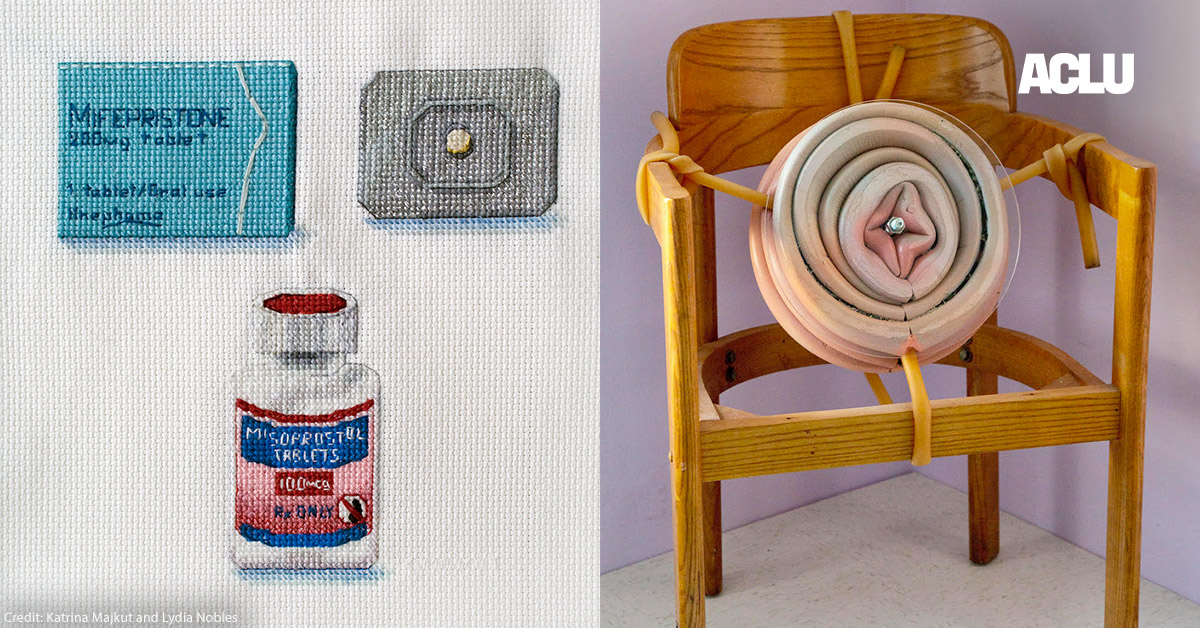
The NPFAA is an integral part of this censorship wave; indeed, it has already resulted in one Idaho public university pulling art about reproductive health care from a planned exhibit. So long as they are allowed to persist, these attacks on free speech will prevent us from having necessary conversations about abortion and all but silence the majority of Americans who believe people should have access to abortion.
Our suit seeks to reverse this trend, protect academic speech, and return the vital spirit of intellectual inquiry to Idaho’s public universities. To allow Idaho to censor our plaintiffs would, as the Supreme Court cautioned, disregard the “vital role in a democracy that is played by those who guide and train our youth,” “impose [a] strait jacket upon the intellectual leaders in our colleges and universities,” and “imperil the future of our Nation.”
For our democracy and future generations, we cannot let the NPFAA stand.
Comments
Post a Comment