Earlier this month, a federal grand jury indicted Culpeper County, Virginia Sheriff Scott Jenkins for allegedly taking cash bribes and large campaign donations in exchange for appointing people “auxiliary deputy sheriffs” and allowing them to carry concealed firearms without a permit. Another sheriff, Chuck Jenkins (no relation) of Frederick County, Maryland, was also recently indicted for an alleged scheme that involved machine gun trafficking in exchange for political support in his re-election campaign.
These two sheriffs have more than just their names and reputed scandals in common: they both work with Immigration and Customs Enforcement (ICE).
Despite the criminal charges and a record of civil rights violations, the Biden administration has chosen to continue partnering with the two sheriffs through an immigration enforcement program known as 287(g), which permits state and local law enforcement agencies across the country to exercise federal authorities that are usually reserved to ICE agents.
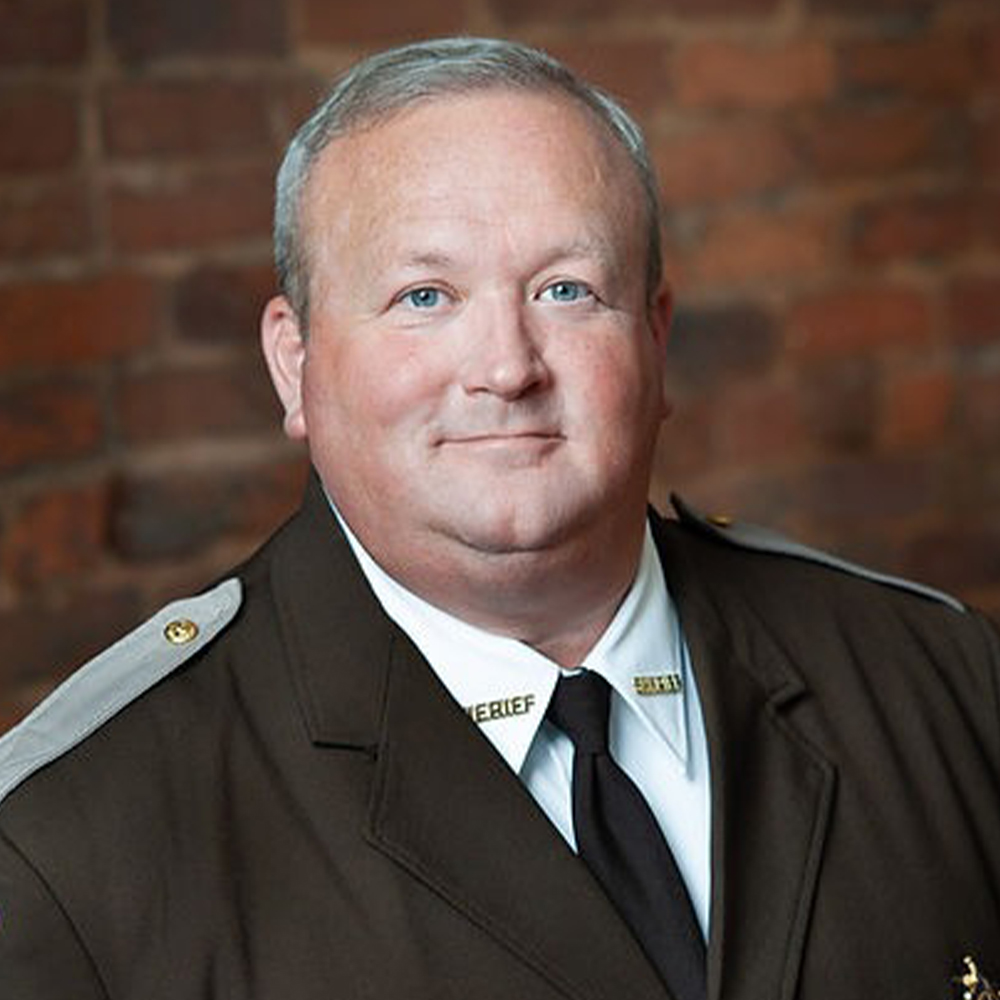
Sheriff Scott Jenkins
(Culpeper County Sheriff’s Office)
The program sounds technical, but its effect is devastatingly simple: Millions of our neighbors live in fear that if they interact with local law enforcement — even just seeking protection in urgent situations such as domestic violence — they’ll be turned over to ICE and deported from their families and the places they call home.
The two sheriffs are far from the only controversial law enforcement officials in the program. A 2022 ACLU report found that 65 percent of the Biden administration’s 287(g) partners have records of racial profiling and other civil rights violations, while 59 percent have records of pushing anti-immigrant hate.
Some of these sheriffs have expressed their anti-immigrant beliefs as a core part of their jobs. In an interview in which he touted the 287(g) program and appeared in uniform, Jenkins (of Maryland) described immigration to the U.S. as “chemical warfare against the United States,” because “the entire world hates this country, everybody around the world hates America, what we stand for, what we’re all about, the fabric of our society.” He bragged about creating a “virtual fence” around his county through immigration enforcement — falsely contending that neighboring counties without the program are “overwhelmed by illegals, a lot of criminals.”
The Biden administration can’t control local sheriffs — who are free to disagree with the Biden administration’s immigration policy and have the right to express their views.
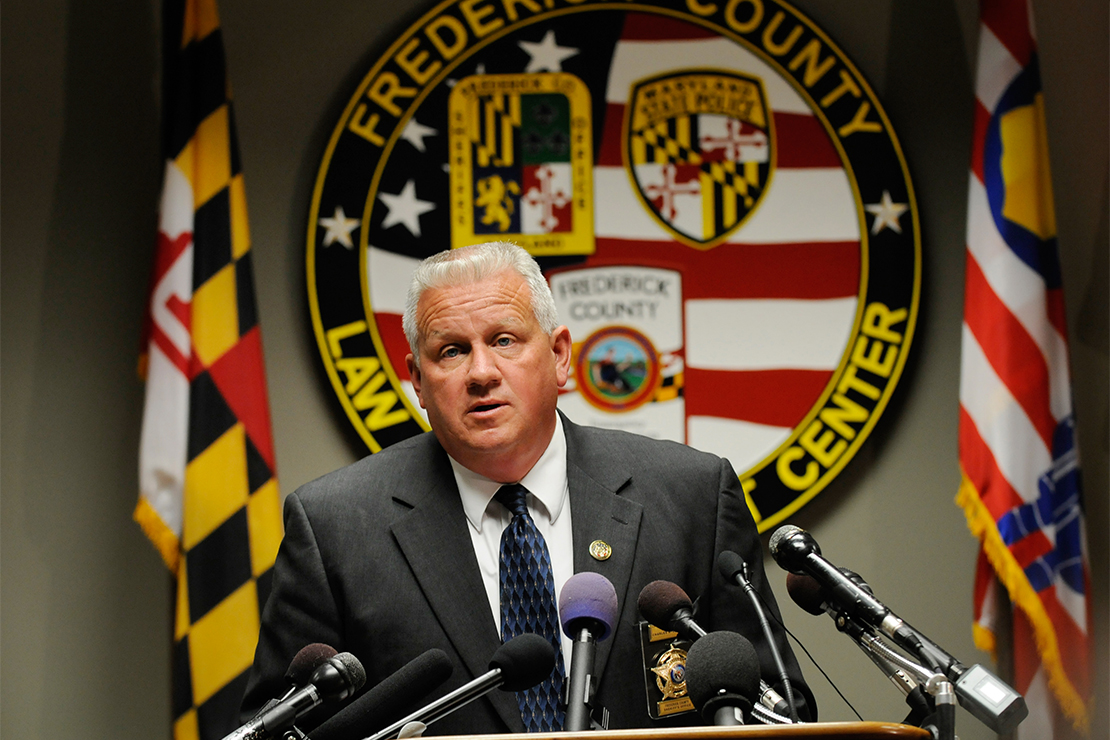
Sheriff Chuck Jenkins addressing the media.
ASSOCIATED PRESS
But the federal government can, and must, refuse to grant federal immigration powers to individuals who use their platform to stoke hatred and fear of immigrants.
And the federal government should not fund law enforcement by those who violate the civil rights of people in our communities.
We’ve seen again and again that sheriffs who make anti-immigrant statements have condoned or even encouraged illegal racial profiling in the policing of their communities. A glaring example is Alamance County, North Carolina Sheriff Terry Johnson, a current 287(g) participant with a long history of racist, anti-immigrant rhetoric. A damning Justice Department civil rights investigation found that the sheriff fostered a “culture of discrimination” that permeated the entire agency, and a pattern of discriminatory targeting of Latino people in arrests and detention. This prompted ICE to terminate the 287(g) partnership with the sheriff in 2012. But the Trump administration re-signed the sheriff onto the program — and the Biden administration has so far refused to terminate the agreement.
As a candidate, President Biden pledged to roll back 287(g) agreements initiated under Trump. More than two years into Biden’s term, the 287(g) program has only minorly shrunk from a peak of 152 partnerships under President Trump to 137 partnerships.
Meanwhile, numerous law enforcement leaders have spoken out against the program even while many face political and legal attempts to compel their participation. They include Mecklenburg County, North Carolina’s Sheriff Garry McFadden, who believes 287(g) undermines public safety and the prerogative of local voters. The state legislature in Florida has passed a law attempting to override local prerogatives and force sheriffs to apply to join the 287(g) program, while House Republicans in Congress have introduced legislation that would require ICE to approve any partnership application — no matter how abusive the sheriff.
Without a Senate-confirmed ICE director, the 287(g) program’s fate largely lies with Department of Homeland Security Secretary Alejandro Mayorkas. He continues to face down impeachment threats by the Republican-controlled House, which may be (wrongly) stalling the ICE reform agenda.
White House interests are at stake. President Biden issued important executive orders that led to a new policy to address racial profiling. But there’s a total mismatch between these White House efforts and its inaction on the 287(g) program, which is a notorious vehicle for racial profiling.
The consequences for our neighbors and loved ones are stark. “I’ve actually had clients who have told me that they didn’t go to the hospital when they had their first child because they were really worried,” said local attorney Adriel Orozco, who co-wrote our complaint on 287(g) partner Alamance County.
It’s long past time for the Biden administration to stop empowering racist sheriffs — and do more to support civil rights and protections in our communities.
Comments
Post a Comment