Sixty years ago today, the Supreme Court issued its landmark decision in Gideon v. Wainwright. The court held that states must abide by the Sixth Amendment and that those whose liberty is threatened by criminal prosecution have the assistance of an attorney: “The right of one charged with crime to counsel may not be deemed fundamental and essential to fair trials in some countries, but it is in ours. … This noble ideal cannot be realized if the poor man charged with crime has to face his accusers without a lawyer to assist him.”
In the decades since, the Supreme Court has expanded the right to counsel in important ways, declaring that the right extends to children in juvenile delinquency proceedings, to probationers in probation revocation proceedings, and to people charged with misdemeanors. The court has established that the right includes an obligation for lawyers to correctly advise their clients about certain immigration consequences of criminal convictions, and that the right includes effective assistance of counsel during plea bargaining.
Today we celebrate these Supreme Court decisions and the public defenders who dedicate themselves to fulfilling Gideon’s promise. Public defenders are guardians of our constitutional rights, and therefore guardians of the freedoms that our rights protect. When public defenders zealously defend their clients, they are holding us all to our stated beliefs that these rights are for everyone — not just the innocent, not just the wealthy or the socially favored.
Safeguarding the Constitution
As we ring in 60 years of Gideon, it’s important to remember what paved the way. Twenty-five years before the landmark decision, the court held that the Sixth Amendment requires counsel to be provided to someone unable to hire their own lawyer in federal criminal cases. And 50 years before Gideon, our country’s first public defender agency — conceived of by California’s first female lawyer — opened its doors in Los Angeles, California.
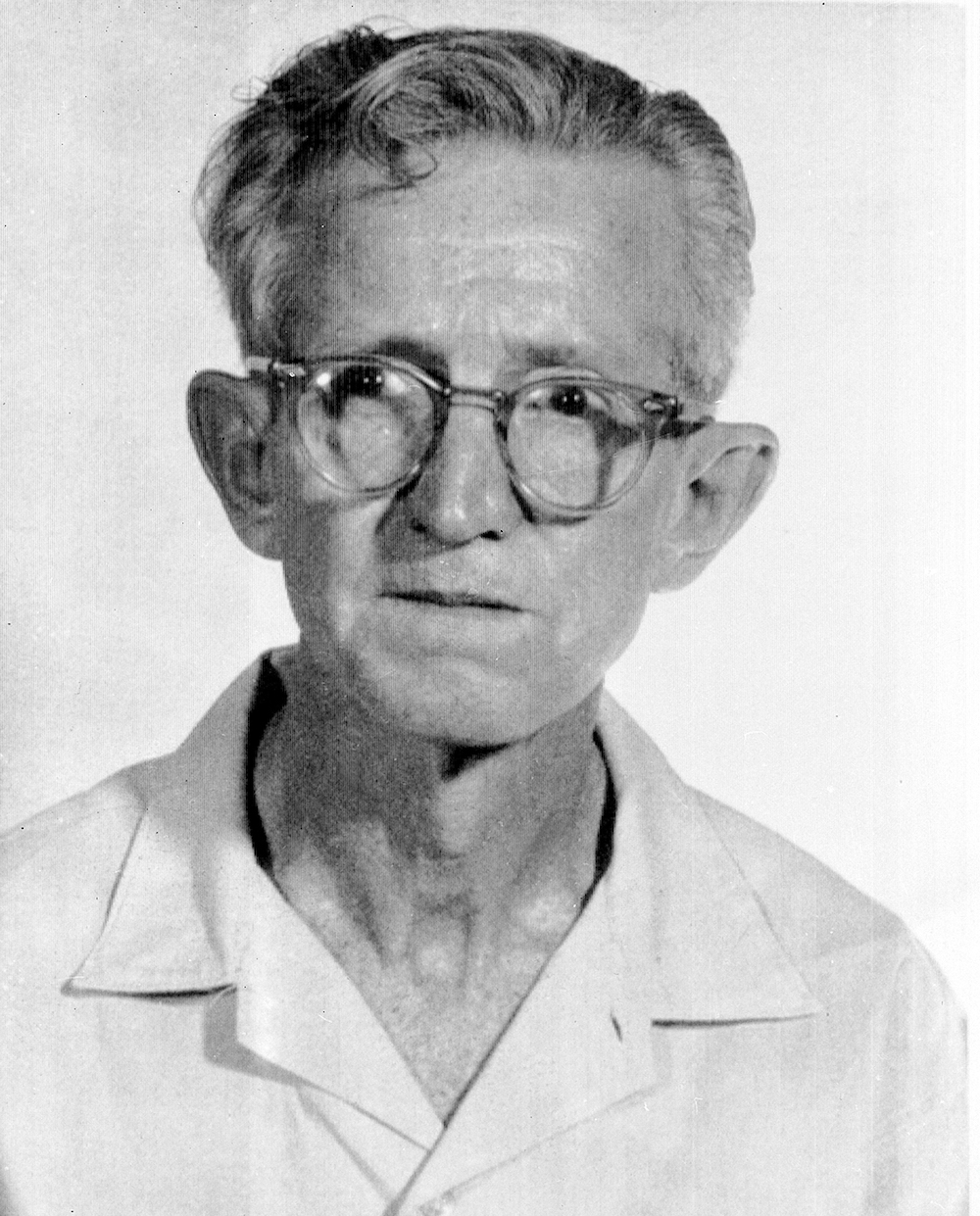
Clarence Earl Gideon
Credit: AP Photo
By the time Gideon was decided, many states already had laws or procedures in place to ensure that indigent people at risk of losing their liberty were represented by counsel. But some states lagged behind. Florida, the state in which Gideon arose, argued in the Supreme Court that it “should not be required to equalize social and economic conditions among its citizens,” by providing counsel for all indigent people. Alabama and North Carolina filed an amicus brief agreeing with Florida and asking the court to leave them alone. They argued that forcing states to abide by the Sixth Amendment would be “socialism,” and that those “gratuitous services” should only be provided if “the people of individual states” believe they “are warranted morally or are feasible financially.” Fortunately, they lost, and Clarence Earl Gideon won.
The right to counsel is fundamental: It means a criminal defense lawyer is there to uphold everyone’s constitutional rights — even those accused of violent crimes. And public defenders know that our constitutional rights are only as strong as our willingness to uphold them in the face of the worst accusations. Our rights include the presumption of innocence, which means it is the government’s job to try to prove our guilt beyond a reasonable doubt. Public defenders dedicate themselves to the wisdom handed down by Nelson Mandela, Mahatma Gandhi, and Fyodor Dostoyevsky, who all taught a version of the same lesson: “A society should be judged not by how it treats its outstanding citizens, but by how it treats its criminals.”
Public defenders will stand beside you, insist on your humanity, and demand that you are entitled to the protections of our constitution no matter what. They fight at every turn — seeking pretrial release, challenging the introduction of the government’s evidence, holding the government to its burden of proof at trial, negotiating favorable plea deals, and advocating for humane sentences.
Ensuring That Constitutional Rights Endure
The Eighth Amendment “imposes substantive limits on what can be made criminal and punished as such,” but the Supreme Court has decided that those limits are “to be applied sparingly.” As a result, our collective choices about what is criminalized changes considerably over time, reflecting shifts in social mores and politics. At different times in this country’s history, we have criminalized people who escaped enslavement, sexual contact between people of the same gender, filming the police, interracial marriage, adultery, and contraception. Marijuana possession and distribution remains criminalized in the federal code and in many state codes, while in other states marijuana distribution is a legal and booming business. And we are now returning to an era of increasing criminalization for having or helping someone have an abortion, as well as bills that criminalize gender affirming care. Public defenders ensure that our constitutional rights endure, in contrast to the ever-changing and often unjust landscape of what we call “criminal.”
Exposing Abuses of Power
In addition to upholding our rights and protecting the most disfavored among us from arbitrary and lawless treatment, public defenders play a crucial role in exposing government abuses of power. As they challenge the government’s evidence, public defenders discovered government programs that invade our privacy, including overbroad use of surveillance cameras attached to utility poles, flawed facial recognition technology, and the mining of discarded or shed DNA. It was appointed counsel representing detainees at Guantanamo Bay who exposed one of the darkest chapters of recent time — government-sponsored torture, physical abuse, and arbitrary detention.
Public defenders also expose racist practices in law enforcement. They raised the alarm on rampant Fourth Amendment violations in the New York City Police Department’s stop and frisk program, which targeted people of color, especially Black New Yorkers, and the LA County Sheriff’s racial profiling on the I-5 freeway. In Seattle, Washington, public defenders challenged a system of racially biased prosecutions for drug crimes, which ultimately led to the creation of a groundbreaking diversion program.
Making the Noble Ideal a Reality
We are living in an era of mass incarceration and overcriminalization that has robbed generations of their liberty, torn families and communities apart, and entrenched economic and racial inequality. Public defenders witness and attempt to combat this systemic oppression every day. Despite the essential roles public defenders play, they are consistently undervalued. In too many places, lawmakers don’t adequately fund public defenders, and as a result, peoples’ access to quality public defense lags behind our “noble ideal.” If we are ever to realize this ideal, we must better understand the crucial role public defenders play in protecting all of our rights.
Sixty years ago, Gideon ushered in a new era, establishing a fundamental legal protection for people accused of crimes. The decision resulted in meaningful change, but there is more work to do because the principle announced in Gideon is not yet a reality across much of the country. At a moment when our fundamental rights are being increasingly eroded, we must fulfill the promise of Gideon. Thriving public defense systems strengthen our constitutional order, an interest that we all share.
Comments
Post a Comment