
One year ago, transgender people and our families reacted in horror as Texas Gov. Greg Abbott directed the state’s family policing agency, the Texas Department of Family Protective Services (DFPS), to begin investigating parents with transgender teens. This directive threatened a vulnerable group of young people with being removed from their parent’s custody and put into the state’s overcrowded and deeply problematic foster care system.
The move by Abbott was a stark escalation in the ongoing fight to erase transgender people from public life and prompted outrage from across the state and the country. District attorneys from across Texas said they would refuse to pursue prosecutions against these families, and educators, health care providers, and child welfare experts roundly condemned the directive. DFPS, already facing thousands of resignations, saw another exodus of employees after the announcement.
Taking Greg Abbott to Court
In the year since, the ACLU, the ACLU of Texas, and Lambda Legal filed two legal challenges against the directive and the investigations. Those challenges sought to protect Texas families and transgender teens by blocking the state from enforcing the governor’s order against them.
The first, Doe v. Abbott, was filed on behalf of an employee at DFPS, her husband, and their transgender teen, as well as a psychologist who provides mental health services and support to transgender youth. The state opened an investigation into Jane Doe and her family almost immediately after the governor issued his directive. Jane was reported and investigated by her own employer and placed on administrative leave as her family feared their child being ripped away from them. On March 11, 2022, a state court found the governor’s directive held no legal weight and blocked the state from investigating our plaintiffs. The Texas Supreme Court later affirmed both points while narrowing the relief to the specific parties in the case.
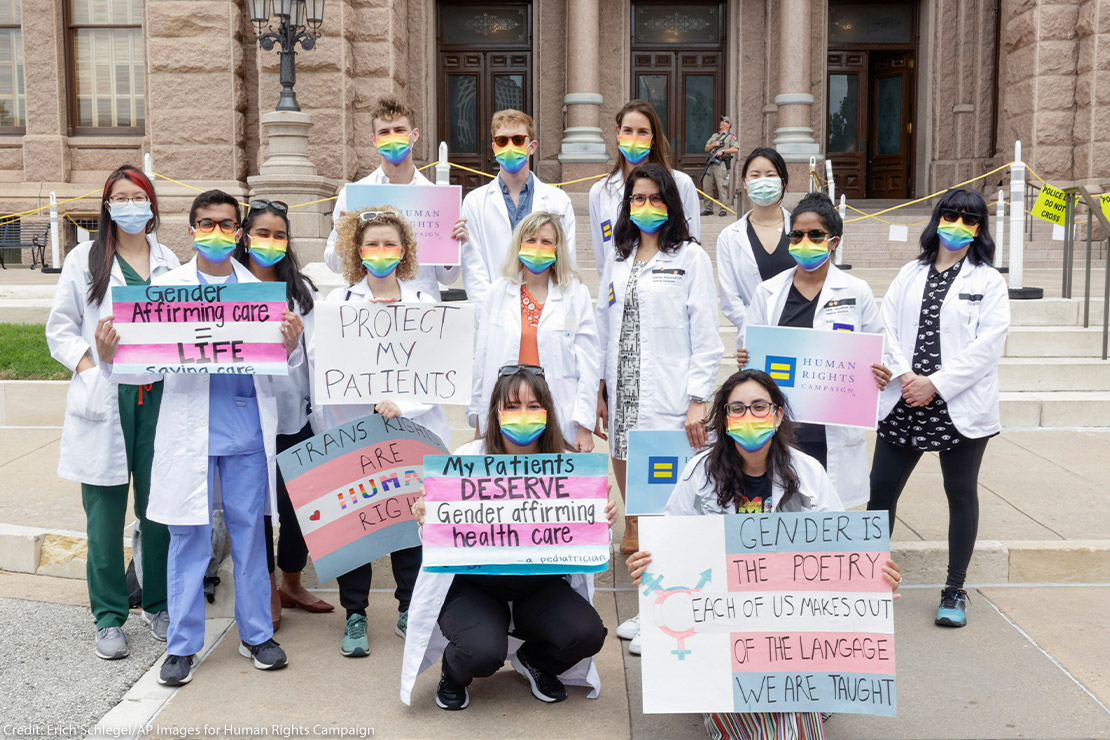
A second lawsuit was filed in June 2022 on behalf of three additional families with transgender youth and PFLAG National, which provides peer support, education, and advocacy for LGBTQ+ people and their parents, guardians, and allies. A Texas state court granted relief for all three families targeted by DFPS — and expanded that relief to cover PFLAG’s 17 chapters and 600 members statewide in September 2022.
Court orders blocking investigations into PFLAG members are still in effect while these cases continue on appeal with a trial scheduled for the fall.
Texas' War on Transgender Youth
While both cases are ongoing, the state continues to persecute transgender youth and their families under Abbott’s directive. Transgender students are being pulled from classrooms and interrogated about their health care and other personal information. Teachers are stalking social media for evidence a student might be trans and turning their families into DFPS. Many families are even making the difficult and arduous choice to relocate their lives outside of Texas altogether, finding new homes, jobs, and schools for themselves and their loved ones. All of this comes at a time when Texas lawmakers have introduced a record number of anti-LGBTQ+ bills, with the vast majority targeted at transgender youth.
This targeting of supportive parents of transgender youth by an agency meant to protect children shocked many across the country. But in truth, agencies like DFPS already threaten Black, immigrant, Indigenous, and low-income families across the country.
As a joint report by the ACLU and Human Rights Watch recently found, conditions of poverty, such as a family’s struggle to pay rent or maintain housing, are often misconstrued by these agencies as neglect and interpreted as evidence of an inability and lack of fitness to parent. This results in over half of Black families becoming the target of a family policing investigation. LGBTQ+ youth are already overrepresented in the nation’s foster care system, where they are more likely to experience abuse and be forced through conversion therapy that attempts to “make” them cisgender and heterosexual.
How to Help
Abbott’s directive represented the expansion of both a political war on transgender youth and the mandate of a family policing system that already endangers families and youth alike. The best way to avoid future attempts to weaponize these agencies for explicitly political purposes is to prevent their abuses altogether, including by fighting for fundamental changes to how states approach child welfare. Our legal advocates will continue our challenge against this directive. At the same time, we urge lawmakers to take immediate measures to strengthen and support families and communities to prevent child maltreatment without subjecting them to surveillance and regulation.
In Texas, the state legislature has introduced a slate of bills attempting to criminalize essential health care for transgender youth and the families and doctors who support them. Texas residents can sign up to take action against these proposed bans and many more bills threatening the fundamental rights of transgender Texans. If you or someone you know needs information and resources for transgender young people in Texas, please visit txtranskids.org to learn more about your rights, how to get legal help, and how to defend yourself against this lawless incursion into your family’s life.
Comments
Post a Comment