Voting is the cornerstone of our democracy, and the fundamental right upon which all other civil liberties rest. The Minnesota Secretary of State is a crucial part of making sure this system runs fairly and accurately so every vote counts. The SOS oversees statewide elections and operates the statewide voter registration system.
The ACLU of Minnesota does not support or oppose candidates, but urges you to cast an informed vote.
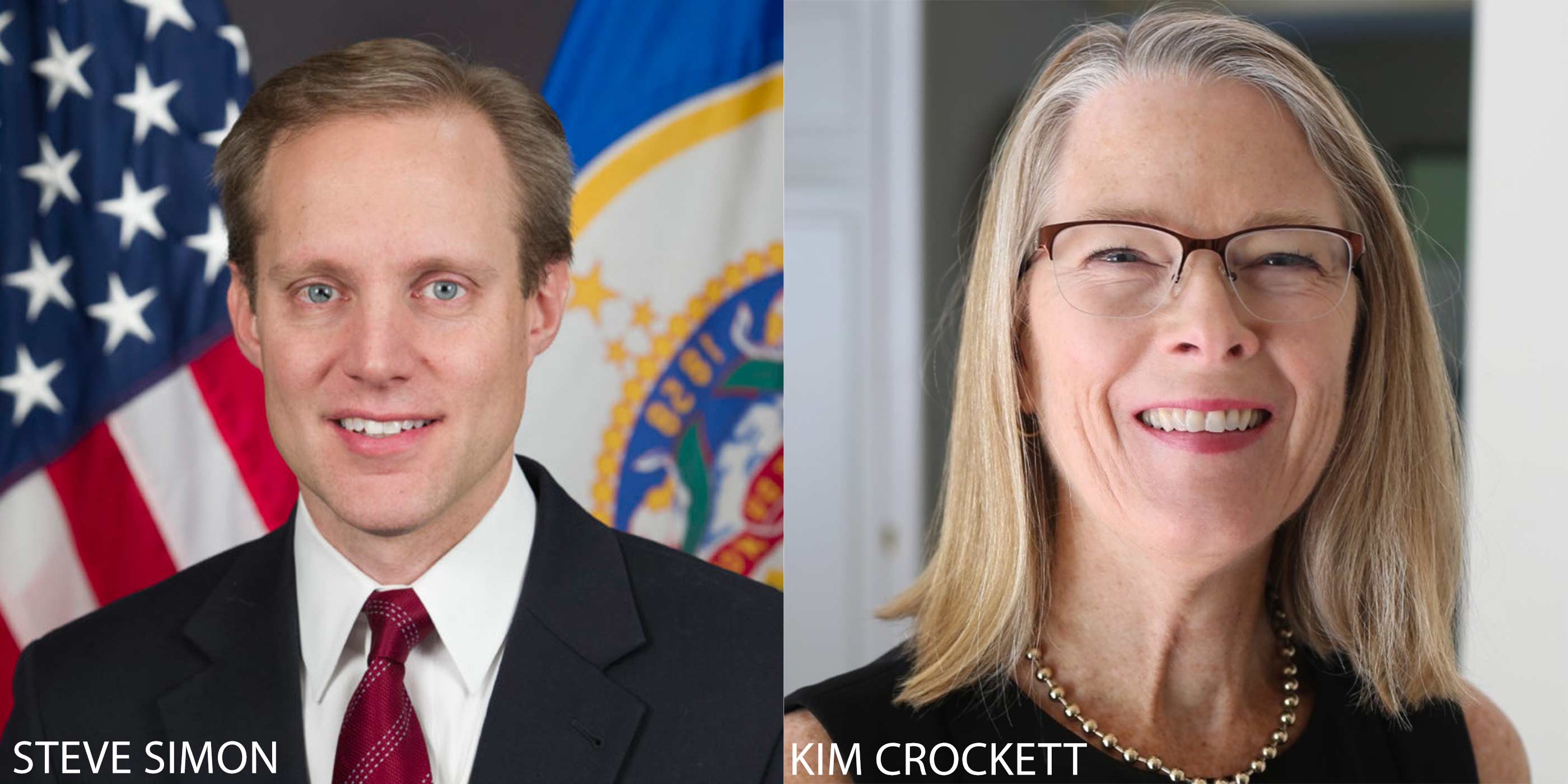
Left: Minnesota Secretary of State Steve Simon. Right: Candidate for Minnesota Secretary of State Kim Crockett.
| Issues | Steve Simon | Kim Crockett |
|---|---|---|
| Do you believe the 2020 election results were recorded fairly and in accordance with the law? | Absolutely. The 2020 elections were under tremendous scrutiny, more than any election I can remember in my lifetime, and the results were clear: the election was fundamentally fair, accurate, honest, and secure. Period. | No* |
| If elected, do you commit to certifying the results of elections after every vote is counted? | Yes, absolutely. | No* |
| If elected, do you commit to mailing absentee ballot applications to all registered voters every two years during each federal election cycle? | My office proudly did so in 2020. But resource constraints preclude the same mailings this year. If resources become available in the future, my inclination will be to proceed with these mailings. | No* |
| Over 2 million early ballots were requested in the 2020 election. If elected, do you commit to protecting Minnesota's early-vote-by-mail opportunities? | Absolutely! I actually wrote the law to make Minnesota a "no-excuses absentee ballot" state, making sure that Minnesotans could vote from home if they preferred or needed to without swearing under penalty of perjury that they would be out of town. We have a great menu of options in Minnesota, and voting by mail is a critical part of that. | No* |
| If elected, do you commit to protecting the right of voters with disabilities or language access concerns to have assistance while casting their ballots? | Absolutely! In fact, I have expanded our protections for voters with disabilities and for those with language access concerns during my time as Secretary of State. For example, we've more than doubled the number of languages we translate our election materials in from 5 to 12. As someone who is the son of an immigrant, I know my mom would want technical documents like this in her native language, regardless of her proficiency in English. That's how things work in the real world, and it's why I'm not going to stop at 12! We're going to keep adding new languages as needed to make sure our elections are as accessible to every eligible Minnesotan as possible, regardless of whether they have a disability or are non-native English speakers. | No* |
| If elected, do you commit to advocating for automatic restoration of voting rights for Minnesotans returning to their communities upon release from prison? | Yes, absolutely. This is long overdue, and we need to do it ASAP. | No* |
| If elected, do you commit to requiring an adequate number of secure state-funded dropboxes be available in every community? | I have always supported the use of drop boxes as an important convenience for voters. In fact, our office successfully negotiated the appropriation of millions of dollars in 2021 to incentivize drop box use in counties and cities all over Minnesota. The best approach, in my judgment, is such incentivization - but I am open to statutory changes that would provide a reasonable ratio of voters-to-drop boxes - particularly in areas of most urgent need. | No* |
Questionnaires were sent to both candidates via email on August 31 with a deadline of September 9. Follow-up attempts were made via public-facing social media accounts. Candidates were informed that their responses, or lack of response, may be made public, and that, unanswered questions would be treated as a “no.”
Comments
Post a Comment