The Supreme Court Must Protect Students From School-Sponsored Prayer | American Civil Liberties Union
On-duty public-school staff may not pray with students. Period. That’s been the law under the First Amendment’s Establishment Clause for more than half a century. Even the Trump administration—hardly a bastion of church-state separation—agreed, proclaiming in its school-prayer guidance that “school employees are prohibited by the First Amendment from encouraging or discouraging prayer, and from actively participating in such activity with students.” But that could soon change if the Supreme Court rules in favor of a public-school football coach who demanded the right to lead his players in prayer at the 50-yard-line at the end of each game.
This morning, the court is hearing oral arguments in Kennedy v. Bremerton School District, in which Joseph Kennedy, a former high school football coach, claims that school officials in Bremerton, Washington violated his religious-exercise and free-speech rights by placing him on administrative leave for repeatedly leading on-field prayers with his team at the close of each football game.
The coach portrays the case as involving his right to personal, silent prayer. But as a Ninth Circuit Court of Appeals judge pointed out in ruling against the coach, Kennedy and his attorneys have repeatedly misrepresented the facts of the case, spinning a “false” and “deceitful narrative.” In truth, the school offered — and Kennedy rejected — several religious accommodations that would have allowed him to engage in private, post-game prayer. Instead, he insisted on continuing his unconstitutional practice of praying with students.
The Supreme Court has long recognized that the separation of religion and government is especially important in our public schools, which must equally serve students of all faiths, and those of none. When public-school officials demonstrably favor some faiths over others or promote religious doctrine, it sends a message of exclusion to students who don’t follow the preferred faith. And students are especially vulnerable to coercion, both subtle and overt, when subjected to school-sponsored prayer or other official religious exercise.
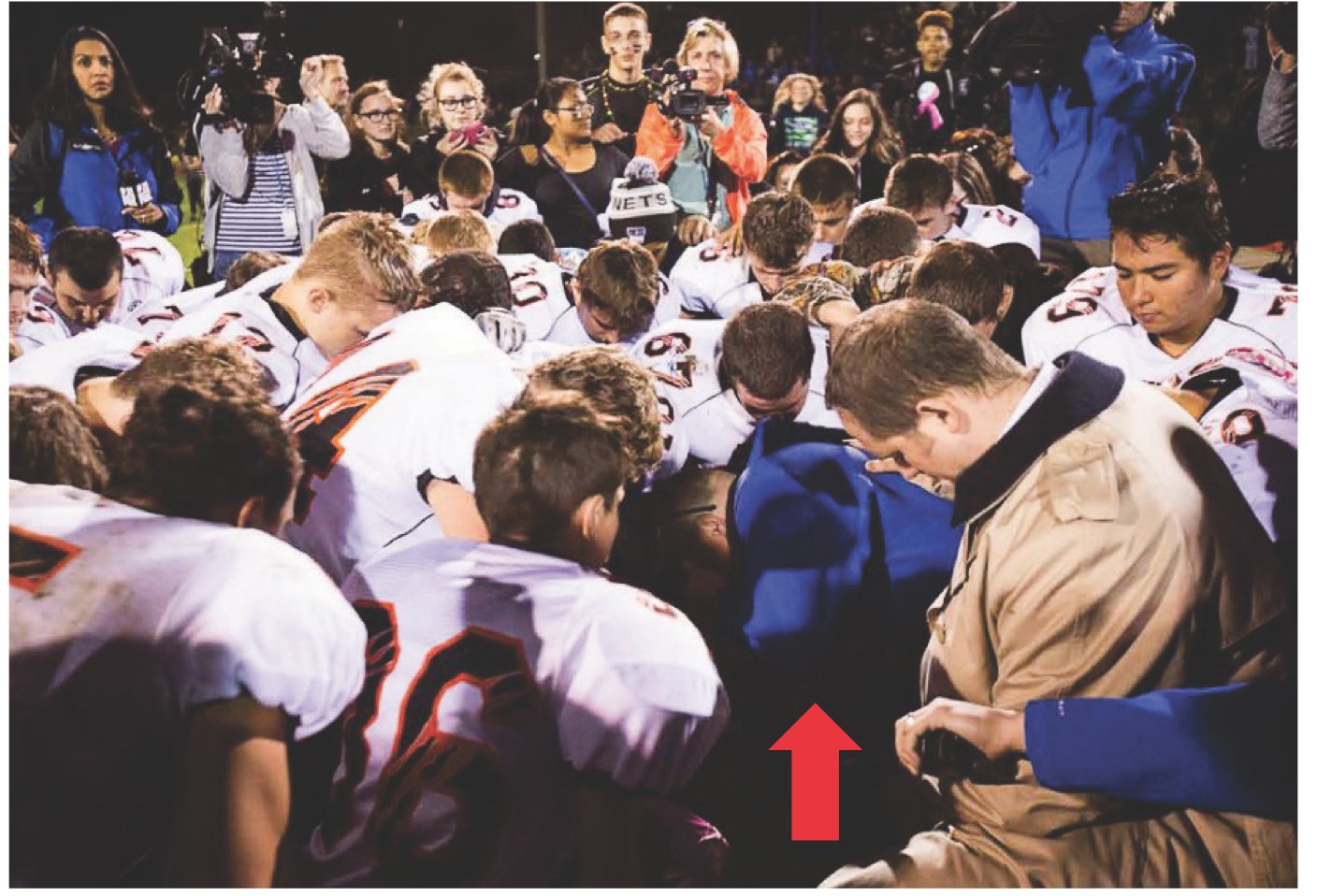
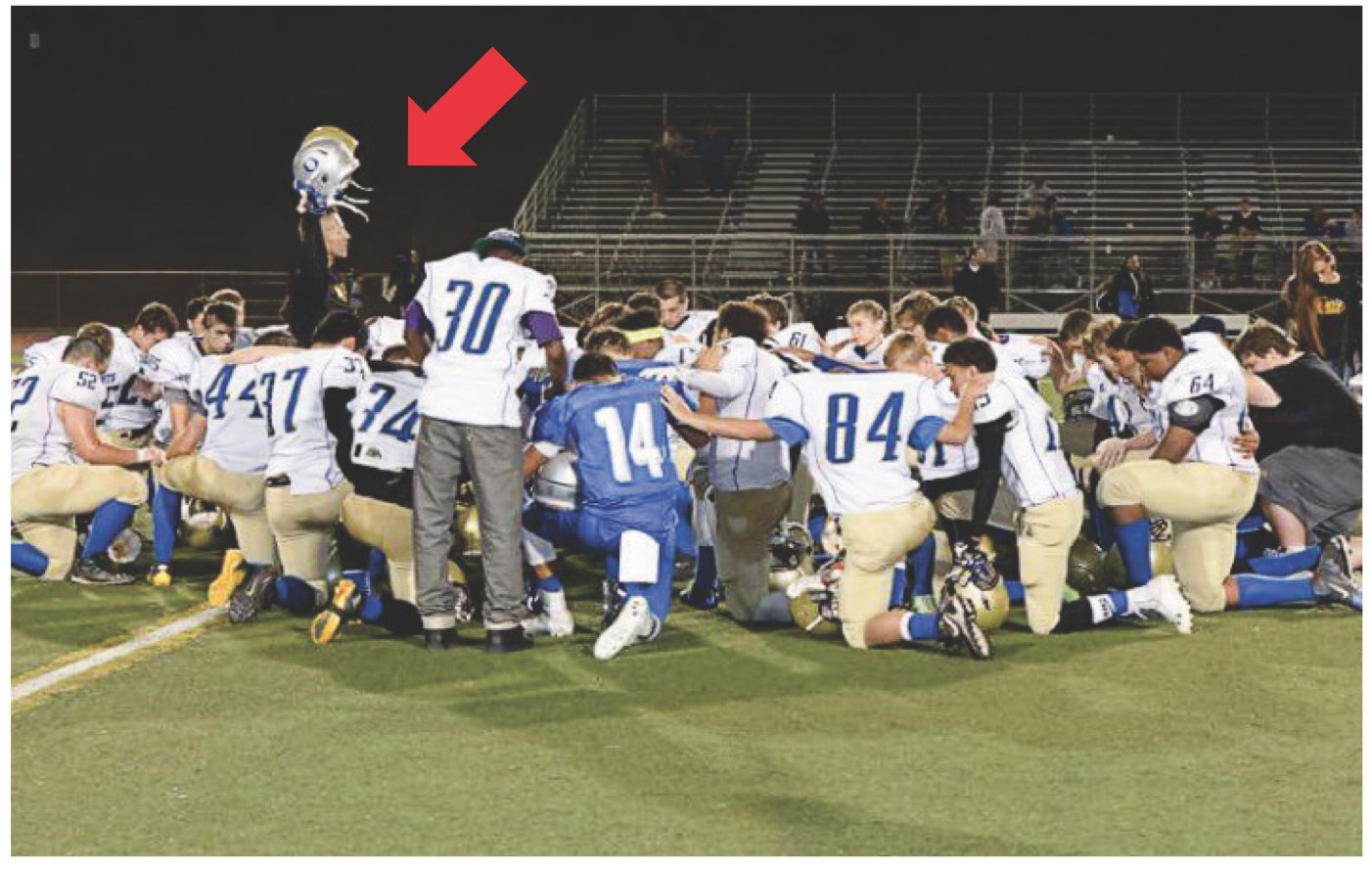
Indeed, several of Coach Kennedy’s players participated in his prayers only because they felt pressured to do so. As one amicus brief — filed on behalf of former professional football players and former college athletes — explains, coaches wield great power and influence over their athletes. Many players are naturally inclined to view their coaches as authority figures and to obey their explicit and implicit commands. Athletes understandably seek the approval of their coaches, who control nearly all aspects of their participation and playing time. For some high school students, coaches may be instrumental in their ability to obtain collegiate athletic scholarships. Under the gaze of their coaches, fellow team members, the audience, and the media who gathered to cover Kennedy’s highly publicized prayer, few students would feel comfortable opting out of the post-game prayer huddle.
The ACLU strongly supports the free exercise of religion and free speech. Earlier this year, for example, we filed an amicus brief with the Supreme Court, arguing that the City of Boston unconstitutionally denied a Christian group’s request to fly, for a single hour, a flag featuring a cross on a city flagpole. The city denied the request even though it had intentionally opened up the flagpole as a public forum and consistently allowed dozens of other groups to temporarily raise their flags. The flag in that case, we explained, was private speech and would be understood as such by the community, and therefore had to be accommodated.
Not so in Bremerton. Kennedy conceded that he delivered his prayers while he was on the job, explaining to the press that the prayers were, in his view, “helping these kids be better people.” Even if the school disclaims any endorsement, a student who witnesses the coach lead his team in prayer would still perceive it as bearing the school’s stamp of approval. And anyone familiar with the coach-athlete relationship would immediately understand just how coercive that practice is. In barring him from praying with students in this setting, while offering him many ways to pray privately, school officials did only what was required of them by the First Amendment: They protected students’ religious freedom by shielding them from school-sponsored religious exercise. Now, it’s the Supreme Court’s turn to do the same.
Comments
Post a Comment