
Washington, D.C. is in the middle of an emergency manufactured by President Donald Trump to expand his power and create fear in the nation’s capital.
On August 11, President Trump invoked a provision of the D.C. Home Rule Act of 1973 and temporarily placed the Metropolitan Police Department (MPD) under federal control for 30 days, saying he would allow the police to “do whatever the hell they want.” At the same time, he deployed nearly 1000 D.C. National Guard troops and almost as many federal law enforcement agents to patrol the streets. Since he declared this false emergency, Republican governors from six states have sent their National Guard troops to D.C. as well.
For the more than 700,000 people who call D.C. home — and the many more who visit the capital every day — the federal government’s militarized presence is impossible to ignore. Armed National Guard troops are stationed in metro stations, at parks, and on popular streets filled with bars and restaurants, costing taxpayers an estimated $1 million a day. Police checkpoints manned by unidentified federal agencies are popping up across the city, waiting to catch someone who doesn’t have a seatbelt on. Armored military vehicles run red lights and cause accidents in quiet neighborhoods, while heavily-armed, often masked federal agents violently arrest people who are immigrants, and people of color while refusing to identify themselves or provide any information to the bystanders trying to help.
Recently, The Washington Post reported that President Trump plans to deploy military troops and federal agents to Chicago this September, and he has threatened to do the same in Baltimore, New York City, Oakland, and San Francisco, disregarding state and local officials who have loudly proclaimed that this would be unwanted and unjustified.
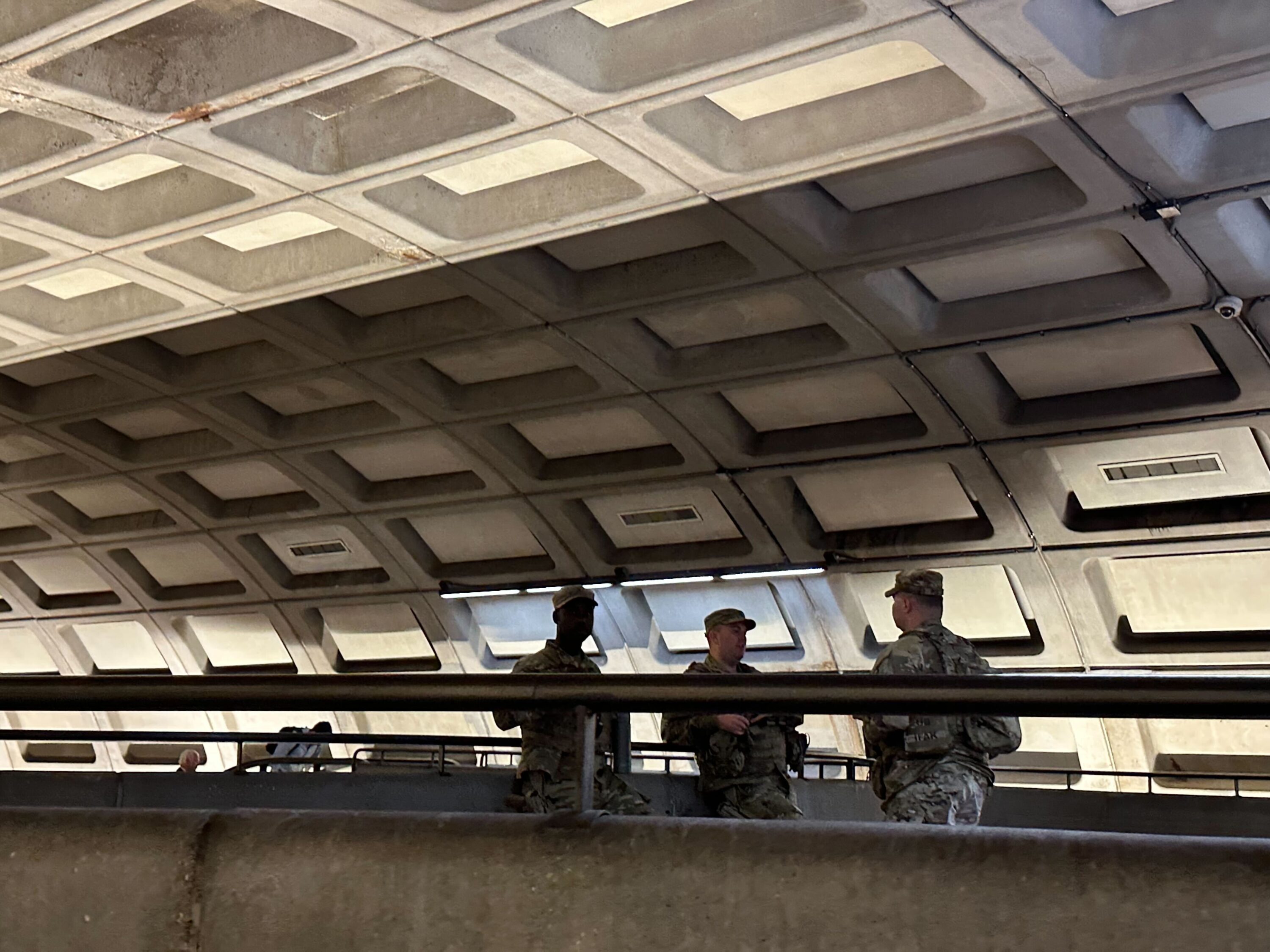
Credit: Sarah Trindell
At the ACLU, we are making clear to Congress that troops do not belong on our streets and urging Congress to pass the VISIBLE Act, which would ban federal agents from hiding their identities. We also know that no matter what agency someone is with—whether federal or local, law enforcement or the military—the Constitution constrains how government employees can treat us.
If you’re in a city where law enforcement or military troops are present, it’s important to know your rights. If you are stopped on the street, you may ask, “Am I free to go?” If the answer is “yes,” you are free to walk away. If arrested or detained, you have the right to remain silent. In certain circumstances, you can also refuse searches of your belongings or car. If you witness or document police or military activity, you generally have the right to record in public spaces as long as you do not interfere with law enforcement activity.
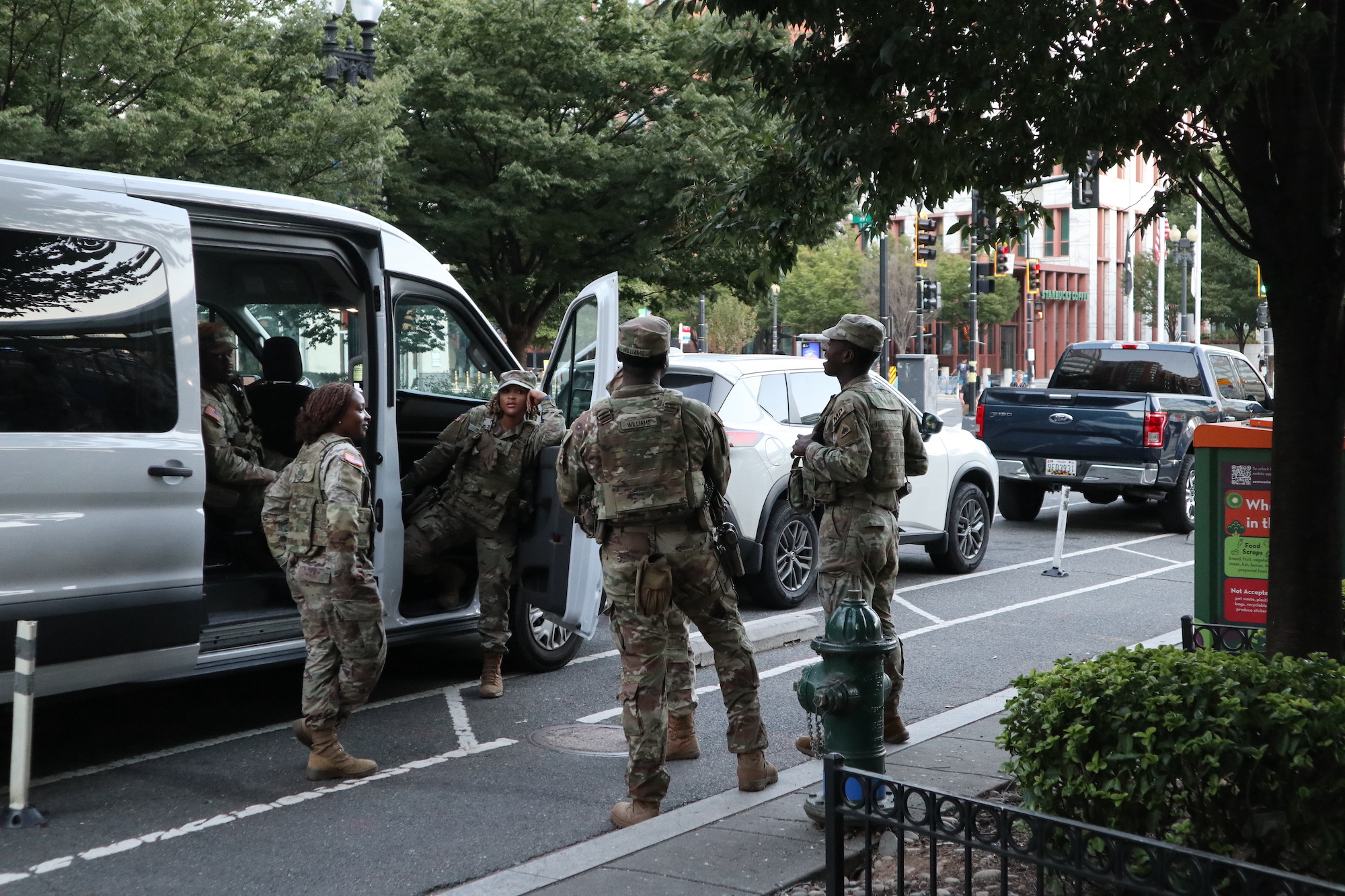
Credit: Sarah Trindell
If asked about your immigration status, you can remain silent, though if you are not a U.S. citizen, the law may require you to carry with you and provide specific immigration documents for your specific immigration status when an immigration agent requests your immigration papers. If you do not have these papers or if you choose to remain silent regarding immigration or citizenship status, an immigration officer might detain you for longer to verify this information. There may also be immigration and other legal consequences if you make this choice. Never lie or present false documents.
The threats to our rights and safety are real, but so is our power and resilience. Knowing our rights is critical to how we hold power accountable. For a full list of your rights when stopped by law enforcement or military police in D.C., see our Know Your Rights resource or join us for a training on September 5.
Comments
Post a Comment