"This is the Moment to Be 100 Percent In." How One of the ACLU’s Immigrants' Rights Experts is Fighting For Our Freedoms.

Maribel Hernández Rivera is a hugger. Her natural warmth and compassion is rivaled only by her sense of preparedness. As a life-long advocate for immigrants’ rights, she has been working tirelessly for months to draft a plan to combat President-elect Donald Trump’s efforts to deport millions of people, including members of Hernández Rivera’s family.
“When I think about [immigrants’ rights] I think about human beings. I think about my father and my husband,” Hernández Rivera says. “I think about how we can respect the humanity of the people whose lives will be impacted.”

Giddel Contreras and Maribel on their wedding day.
Maribel Hernández Rivera
Hernández Rivera has worked in the ACLU’s National Political Action Department fighting for immigrants’ rights since 2021. She previously spent a decade advocating for immigrants’ rights with the New York City Mayor's Office of Immigrant Affairs, the Immigrant Justice Corps, the Mexican American Legal Defense and Educational Fund, and more. While in law school at New York University, she was also an advocate for undocumented immigrants.
For Hernández Rivera, helping the immigrant community is a way to give back, and to ensure that no one feels unsupported in their journey. “When I first came to the states, I thought no one cared,” Hernández Rivera says, explaining how she felt isolated as an undocumented person. “I really want to show others that we’re never alone. There are people fighting for our rights.”
Hernández Rivera came to the states from Mexico in 1993 and settled with her family in Houston, Texas. As a child, she was fearful that if anyone knew she was undocumented, she’d be deported. Even as she excelled in school, learning English and going on to attend Phillips Exeter Academy and, later, Harvard University, she continued to plan for what she might do if she was forced to return to her home country.
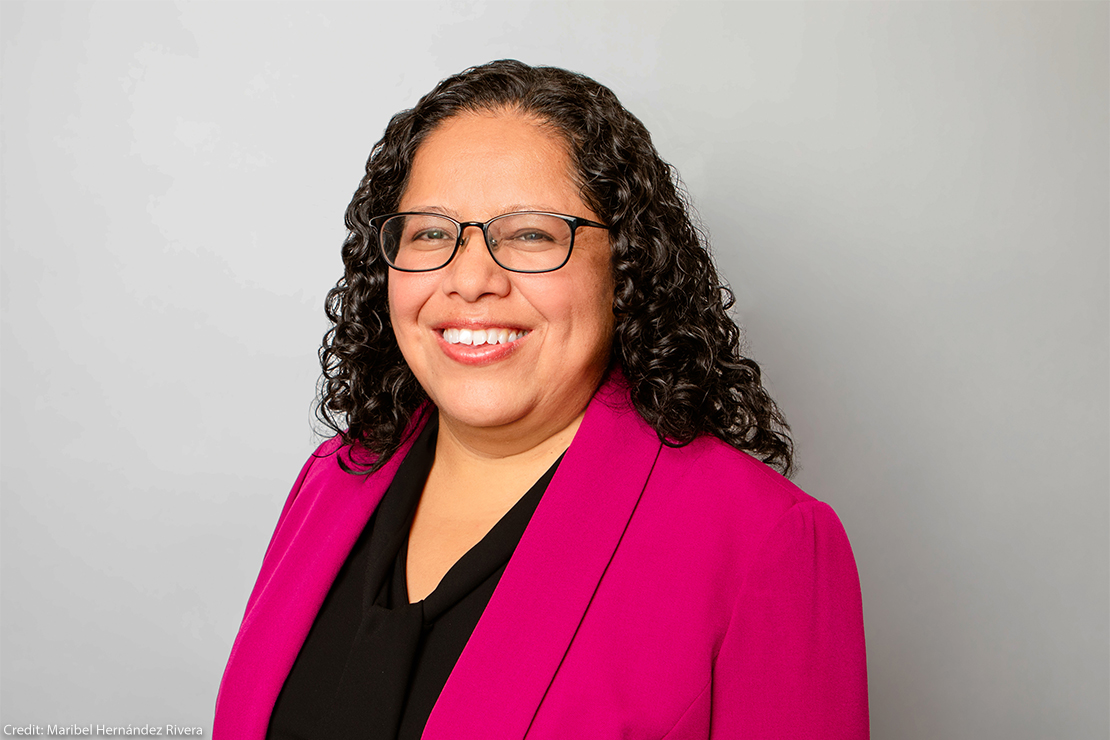
Maribel Hernández Rivera
“I thought that if I was sent back to Mexico, I was going to work as a luggage carrier in the airport. In that case, knowing English would guarantee me a good tip,” she laughs.
While she jokes about it now, reality was much more serious for Hernández Rivera and her family. In 2006, her father died in a car accident while undocumented. The authorities never notified the family of his passing. Hernández Rivera was deeply hurt by the experience. “[My father’s death] really showed how immigrants are not treated as human beings,” she says.
Today, Hernández Rivera honors her father’s legacy by fighting for increased rights, dignity and compassion for the immigrant community. Many people come to the states fleeing violence, or seeking greater opportunity for themselves and the families they were forced to leave behind. But once in the U.S., Hernández Rivera points out, there exists few pathways for legal citizenship and the threat of deportation always looms large. In her own family, Hernández Rivera has seen just how quickly a new life in the states can be taken away.
Hernández Rivera’s husband, Giddel Contreras, has temporary protected status (TPS), which gives immigrants time-limited permission to live and work in the U.S. When Donald Trump was elected in 2016, he vowed to end TPS for millions. If her husband was deported, Hernández Rivera had to decide whether to go with him to Honduras, possibly facing the same violence that led to the deaths of some of his family members, or to stay in the U.S. and support her mother and step-father. Either choice would rip her family in two.
To her great relief, the first Trump administration was not able to eliminate this vital protection. Today, however, Trump has vowed to be more aggressive in his efforts to deport millions of people. Giddel’s TPS status expires this summer and Hernández Rivera finds herself returning to what she has done since she was a child: Making plans for how to survive uncertainty.
“Trump upended our lives the first time around,” Hernández Rivera says. “I know that the second time around, I have to be even more prepared.”
Hernández Rivera’s fight for her family’s safety mirrors her fight for all immigrants. At the ACLU, alongside her legal and advocacy colleagues, Hernández Rivera is working to build a civil rights firewall to protect residents to the full extent possible, including safeguarding asylum access, ending unlawful detention and mobilizing communities to take action. As a native Spanish speaker, Hernández Rivera helps communicate this plan to the communities most impacted by the Trump administration’s draconian policies. Whether it's sharing links on social media or doing an interview in Spanish, Hernández Rivera wants the word out that there is a movement fighting for the immigrant community.
“I get asked every day about how to get ready, what can I do?” Hernández Rivera says. “I must step up, for me, my family and my community. We have to be in this together. This is the moment to be 100 percent in.”
Our series, Behind the Fight for Our Rights, asks individuals defending our freedoms how they’re thinking about the next four years. Below, Hernández Rivera shares insight into her life – both professional and personal – under the Trump administration.
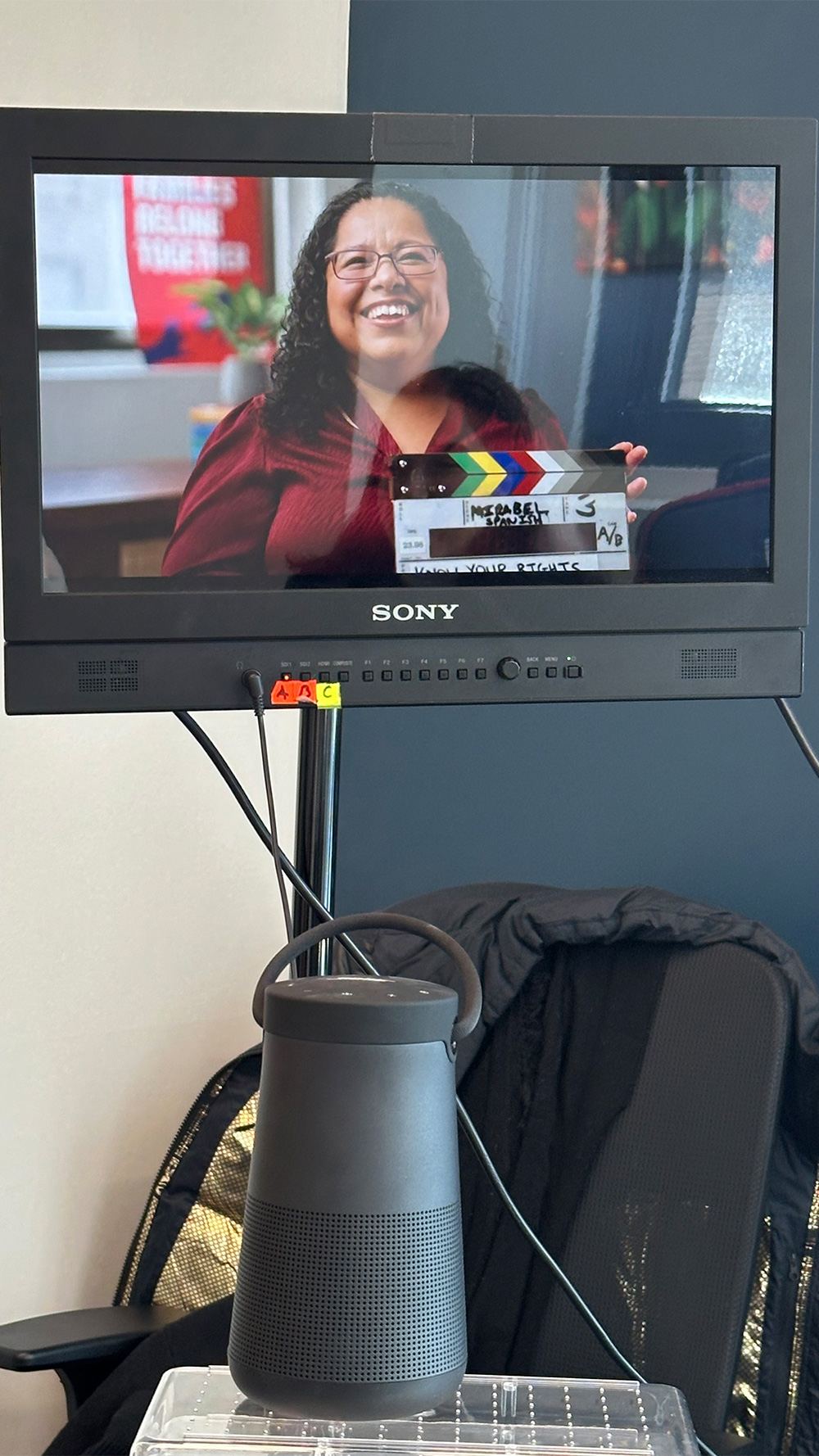
ACLU: What are you most looking forward to in the next four years?
HERNÁNDEZ RIVERA: I know it’s going to be a very difficult four years, but I also know our community is going to come together. I look forward to fighting side by side with our community.
ACLU: What is the biggest challenge you’re expecting in the next four years?
HERNÁNDEZ RIVERA: We know the Trump administration’s policies will be far more cruel than before. The biggest challenge will be losing loved ones to Trump’s deportation machine.
ACLU: What do you wish people knew more about the fight for immigrants’ rights
HERNÁNDEZ RIVERA: I wish people kept in mind that when we talk about immigration, we’re talking about parents, children, neighbors, and community members. It’s not easy to come to the U.S and it's not easy to fix your immigration status.
ACLU: What is one thing you wish you knew about the fight for immigrants’ rights
HERNÁNDEZ RIVERA: I wish I knew that those making the decisions cared about and understood the human consequences of their actions.
Comments
Post a Comment