
Greeted by the newly constructed “Detroit” sign, my colleagues and I arrived in the Motor City for the final stop on the ACLU’s Know Your Rights bus tour. We didn’t actually ride our Know Your Rights bus to Detroit. Instead, we arrived to find the bus in all its glory parked outside the Garden Theater, just off the bustling Woodward Avenue. While Detroit is the last stop on our tour, the KYR bus has crisscrossed the country helping voters know their rights and feel empowered and excited to show up to the polls this November.
In Detroit, the ACLU KYR tour was hosting a live taping of our podcast, At Liberty, as well as a rap concert with the famed Danny Brown. As we entered the theater, well over an hour before the event started, the energy was already palpable. The venue was buzzing. Lights were flashing and enthusiastic volunteers prepped tables with free ACLU Know Your Rights swag, which included cans of La Colombe cold brew and Tony’s chocolates. As it approached time for the doors to open, people began to gather, many talking about the evening’s headliner, the rapper Danny Brown. One fan mentioned that this would be his 15th time seeing the Detroit legend perform.
Danny was closing our event. To kick us off was the comedian W. Kamau Bell hosting a live-taping of our At Liberty podcast. Loren Khogali, the executive director at the ACLU of Michigan, and Razi Jafri, a Detroit-based documentary filmmaker and producer joined Kamau in conversation on stage. Kamau’s lively energy quickly won over the crowd as he made lighthearted conversation about Detroit’s best food spots before diving into deeper topics, like Michigan’s long history of political organizing and the importance of voting.
Razi shared his insight on the mobilization of Muslim and Arab communities in southeast Michigan, emphasizing that such activism mirrored a growing power and movement across America, especially on college campuses. Loren and Kamau expanded the discussion, highlighting the intersectional history of Michigan’s activism. In particular, civil liberties and civil rights in Michigan improved when powerful coalitions of Black, Arab, and other diverse communities across the state worked together.
Kamau, Razi and Loren urged audiences to vote this election season, stressing the importance of understanding how voting intersects with all levels of government — from the president to the state Supreme Court. Loren’s parting words left a lasting impression: "Be curious and be critical. Get out and make a plan to vote!"
ACLU
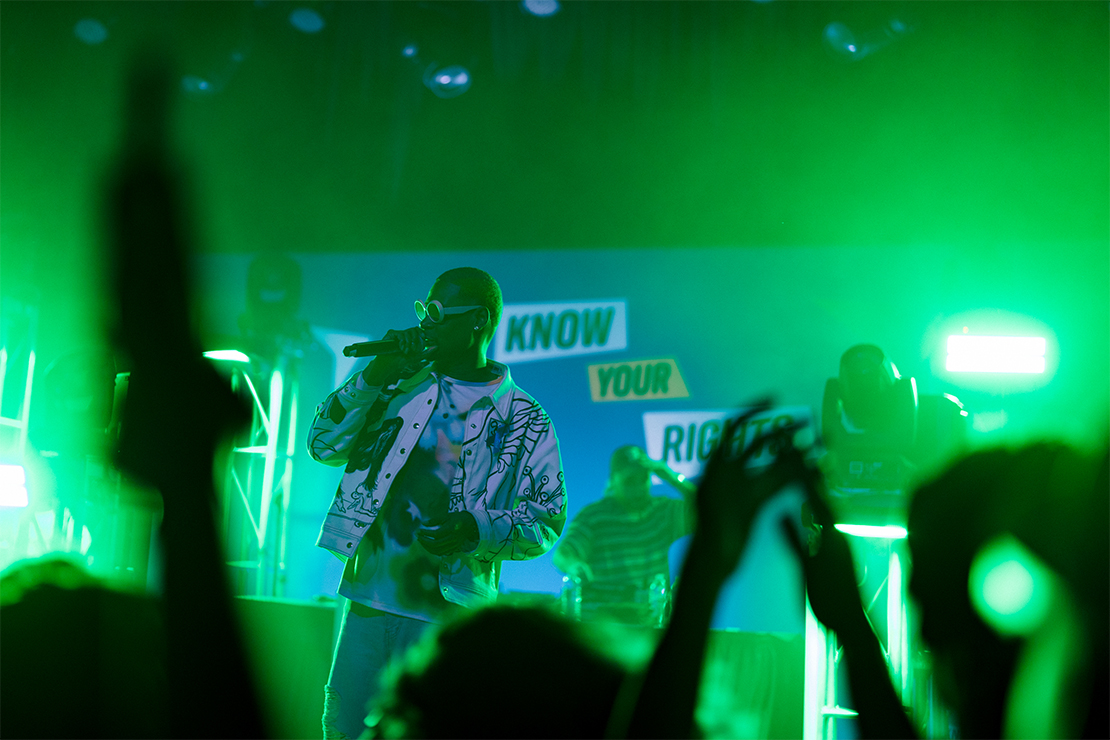
The energy in the room continued to build as beatboxer Stevie Soul took the stage, warming up the crowd with his rhythmic skills. Soon, he was joined by Comic Rapper, improvising rhymes and getting the audience involved, fueling the anticipation for what was to come.Finally, the headline moment arrived. Detroit’s own Danny Brown hit the stage. The crowd erupted.
The Garden Theater pulsed with energy as the bass boomed and lights flashed. Fans crowded toward the stage, singing along word for word to hits like “Grown Up” and “Really Doe.” With his unique voice and flow, the performance was electric, and the connection between Danny and the Detroit community was undeniable.
As the night wound down and we stepped back out into the cool evening air, one fan’s voice carried over the crowd: “Know your rights!” It echoed down the street. It was a reminder that tonight was about more than just a show; it was about empowerment and democracy.
If you weren’t able to catch us on tour, you can still pledge to vote.
Comments
Post a Comment